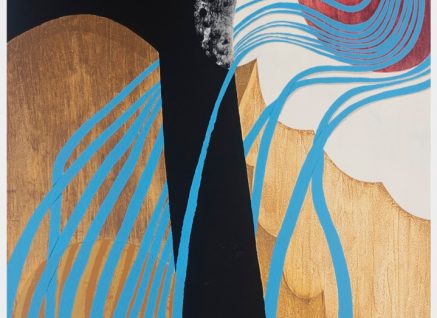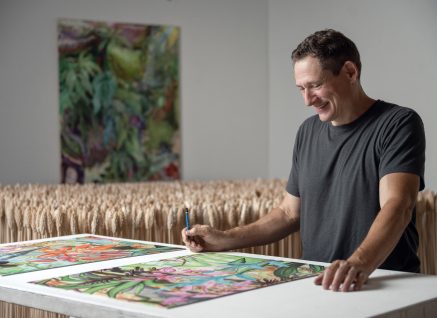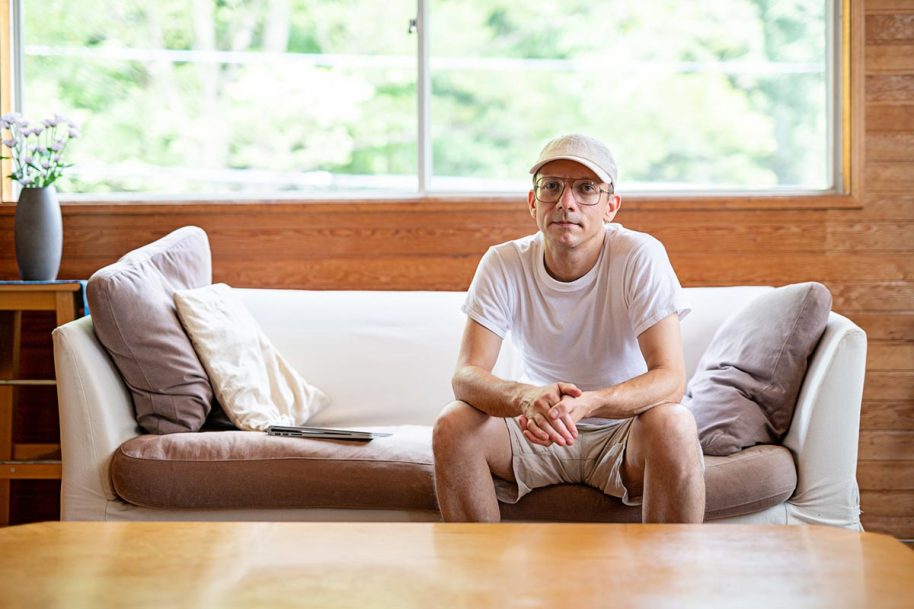
Alex Dodge splits his time between Brooklyn and Tokyo, and his work sits where hand drawing, 3D modeling software and traditional printmaking meet. His paintings are held in the collections of the Metropolitan Museum of Art, MoMA, the Whitney Museum of American Art and the New York Public Library. We spoke with Alex about printmaking as an experimental laboratory, his collaborations with master printers, how living in Tokyo has shaped his studio and the story behind his print Dream Weaver. His Haystack editions Soft Power, Unread Messages and El Norte (Fantasma) are available now.
Your Haystack editions Unread Messages, El Norte (Fantasma) and Soft Power each take a different approach to printmaking. What draws you to printmaking, and how does making a print differ from making a painting?
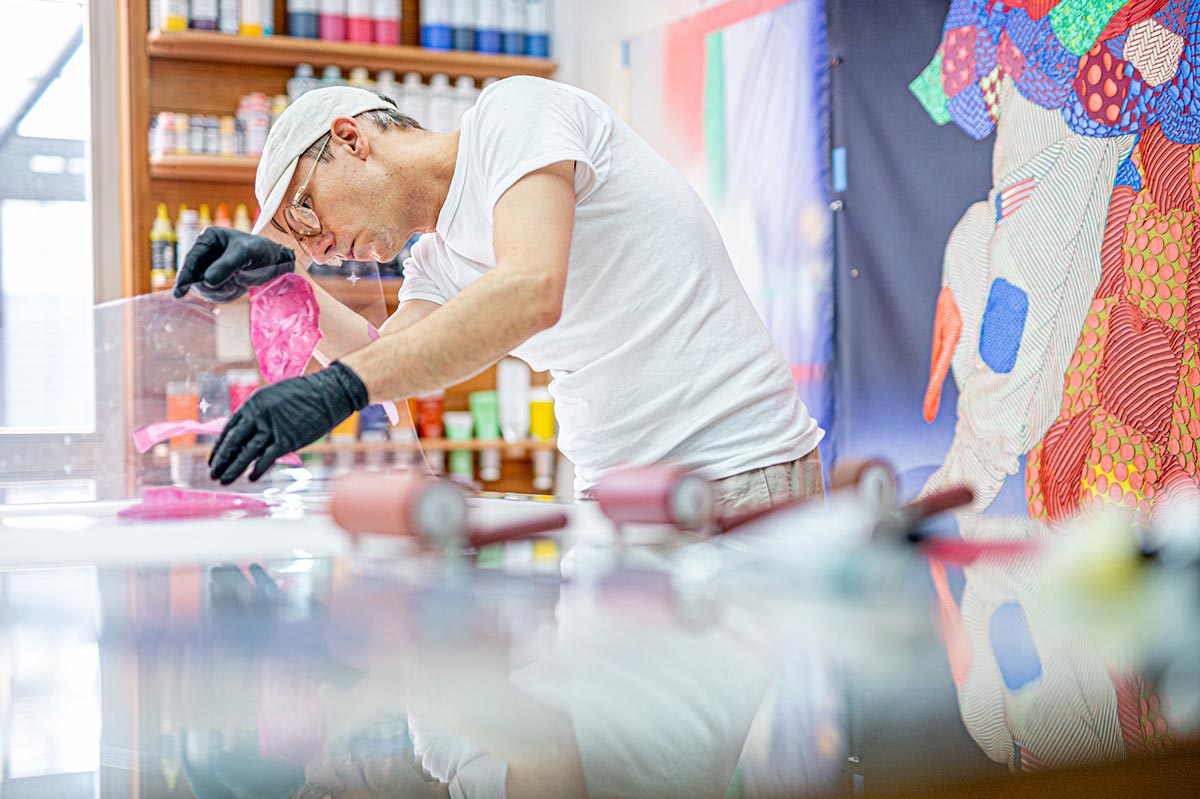
Over the past 20 or so years, printmaking has become central to my work. Much of the process and approach behind making my paintings comes directly from my experience making prints. Printmaking has increasingly served as a way to explore new approaches to making images. I approach each print as a true collaboration with the master printer, shop or publisher. I try to understand not only their unique technical capabilities but also the knowledge and perspective they bring to the process, as a way of arriving at something I couldn’t have discovered on my own. These discoveries often migrate back into the studio, so it’s a truly reciprocal process.
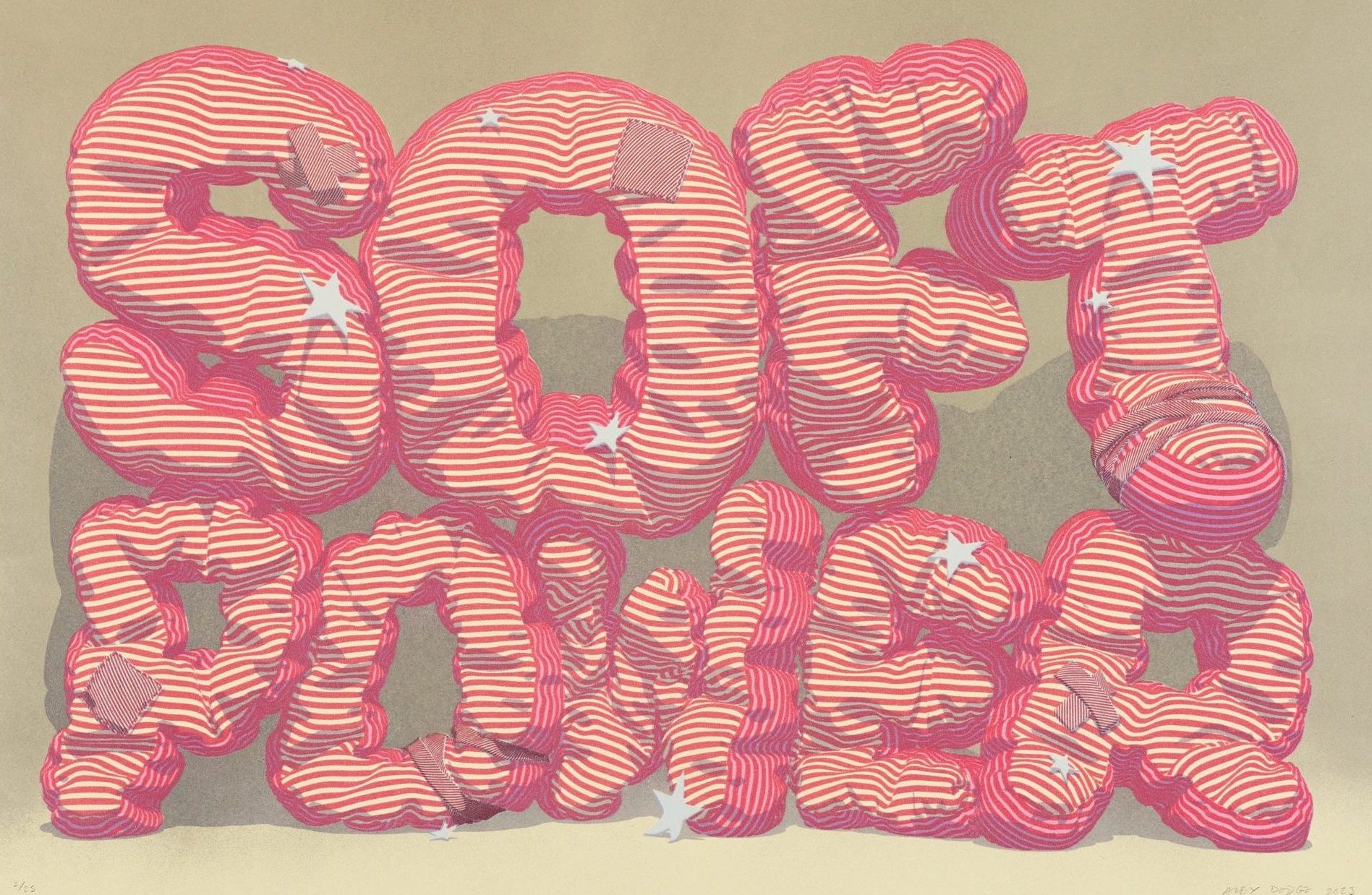
Soft Power is your most tactile edition, with flocking, mica powder and plush letters. How did you decide that a print could carry that much texture?
I worked with Phil Sanders to make this print with Haystack. It was probably one of the more challenging editions I’ve done because it required a lot of iterative problem-solving. Luckily, Phil is the kind of master printer who has both a broad skill set and a willingness to experiment. The path that led to the final image was a true negotiation between our ideas and the technical possibilities of realizing them.
You have worked with master printers Luther Davis and Phil Sanders on your Haystack editions. What did each collaboration teach you, and did anything surprise you in the process?
The surprises are what drive things forward. I try to approach each collaboration with a shop or printer in a way that allows me to do something I couldn’t do otherwise. A lot of artists use printmaking as a way to augment their practice by making renditions of existing works, which is fine, and I do that sometimes too. But as I mentioned, for me, printmaking is more of an experimental laboratory or crucible for new ideas that continue to reshape my studio work.
How has living in Tokyo shaped your studio practice?
Living in Japan has had a deep influence on my work and how I understand materials and process. Spending time with other artists, craftspeople and artisans has had a profound effect on how I work in the studio. I feel that in the US, we often value the ends, or the results, over the means. Witnessing the incredible care that goes into making things in Japan has made me revisit something I’ve always tried to hold closely: that the means are the end, and how we work is ultimately the most important thing.
Your work moves between digital tools and traditional techniques. How do your editions fit into that, and what do they let you say that your paintings do not?
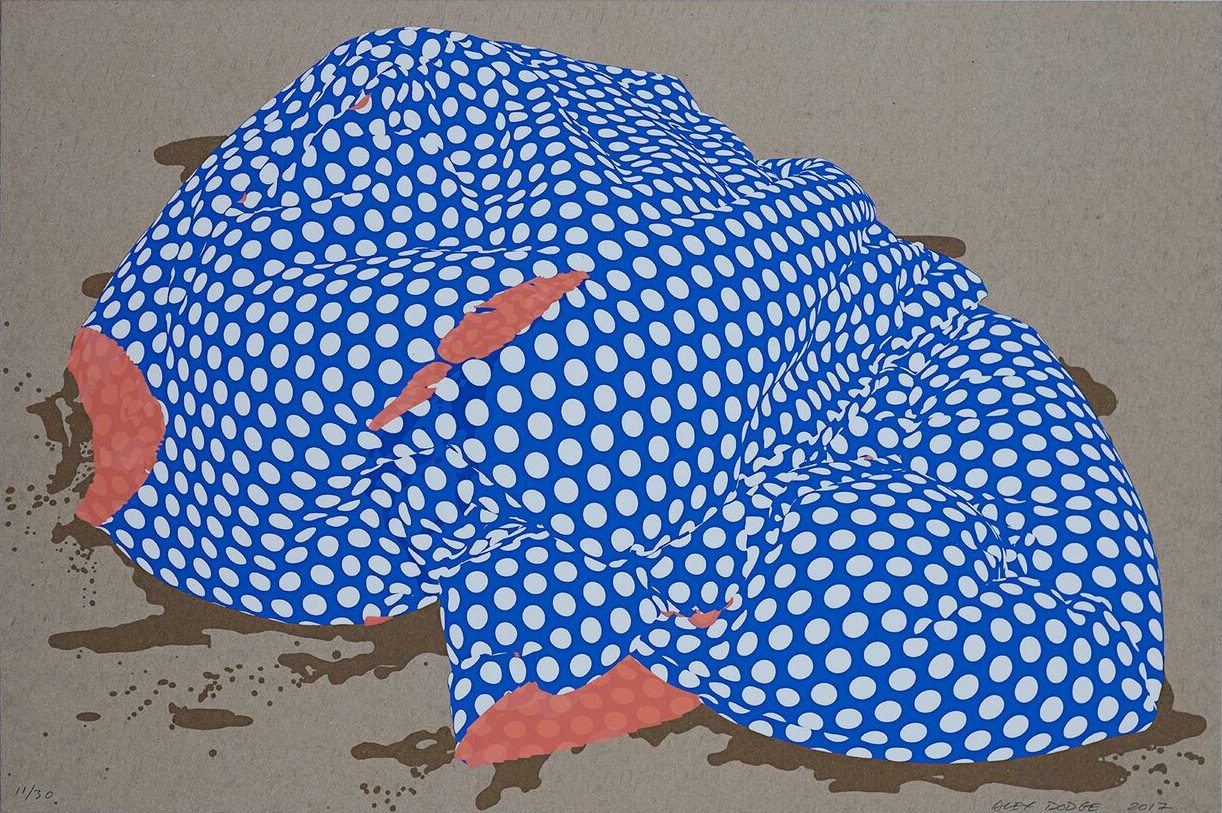
In a way, prints are easier to adapt to the digital aspects of my work. Processes like screenprinting and block printing can more readily translate images that begin as hand sketches but are then developed through 3D modeling and simulation. Making paintings with oil and acrylic presents its own challenges, which I enjoy, but printmaking often allows me to do things I simply can’t do on canvas.
Can you tell us about Dream Weaver? What is it about, and what was the starting point?
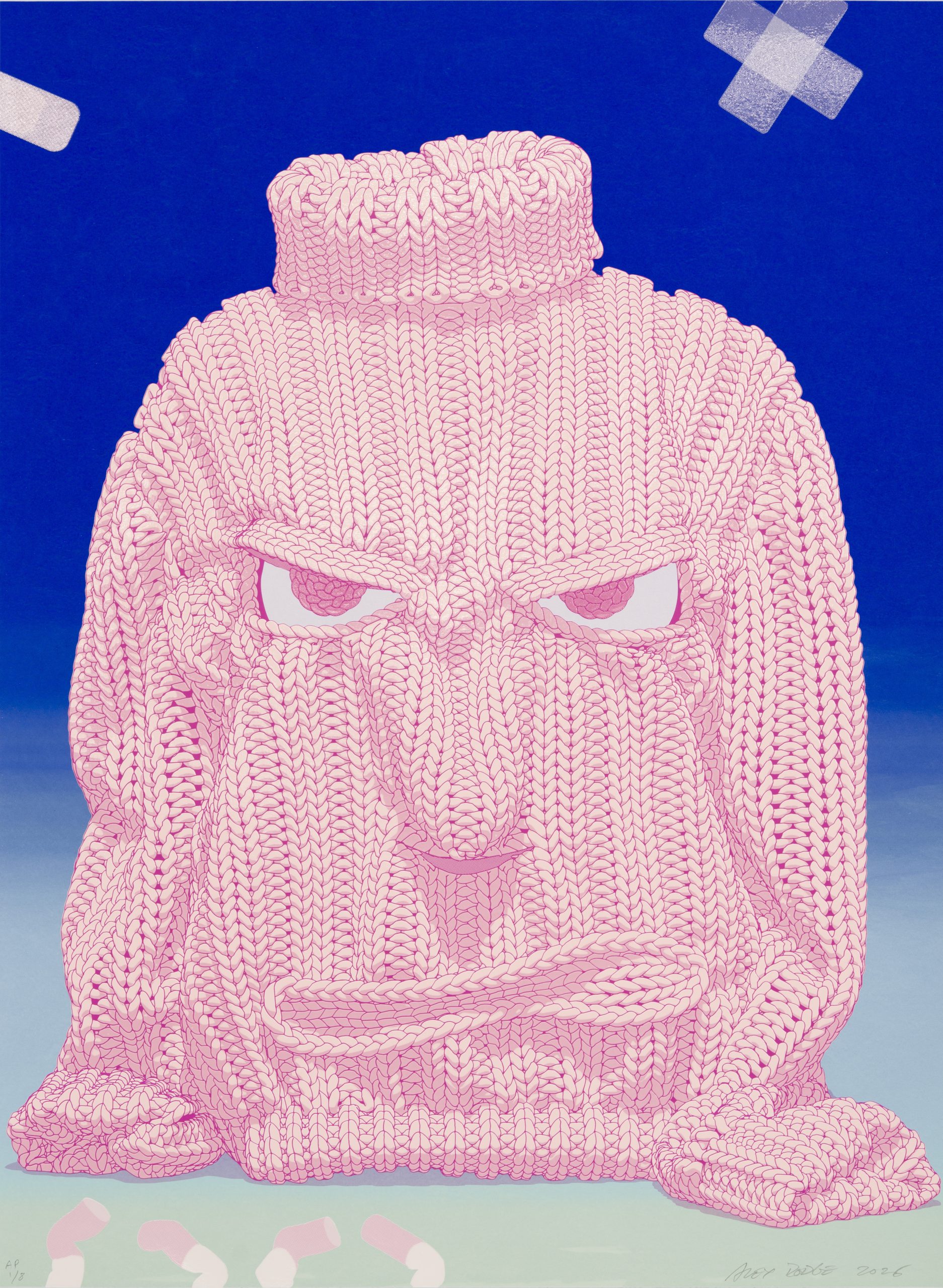
This print presents a sweater character who is decidedly dissatisfied and grumpy. It is the embodied weaver of a digital or algorithmic reality, but one whose warp and weft follow the rigid code of a linguistic loom: a reality that is increasingly inescapable in our current age.
The image has origins that include drawings made together with my daughter, but it also bears a striking likeness to a dreaded middle school principal whose desk was adorned with an ashtray full of stubbed-out menthol cigarettes. The stale smell of that ashtray accompanied the reprimands of a nonconforming child.
Also present in the image are appliqué elements in the form of bandages that I generally refer to as “kludges,” after the programming term for an inelegant fix that works anyway. They’re added late to stabilize a composition, without attempting to hide the fact that they were added. These playful formal devices appear throughout the show.
Interested in adding an Alex Dodge edition to your collection? Soft Power, Unread Messages and El Norte (Fantasma) are available now, exclusively on Haystack. Click here to learn more about Alex Dodge. To inquire about Dream Weaver, get in touch with us at [email protected].