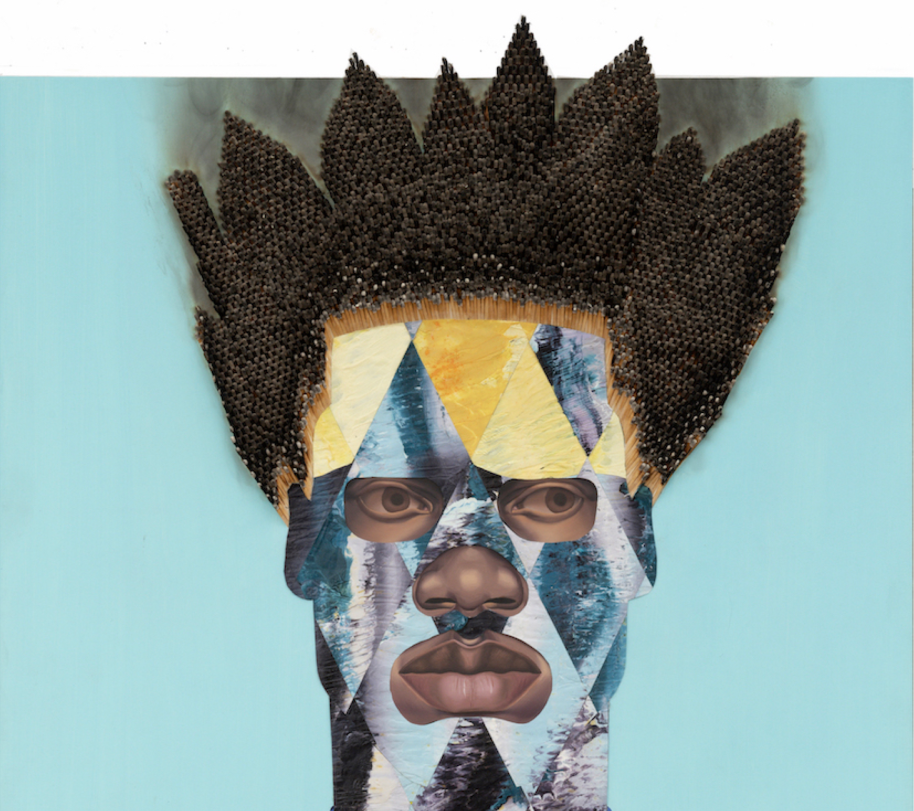
Jeff Sonhouse is a New York-based painter and mixed media artist whose works examine Black identity, masquerade and self-preservation through a layered visual language drawn from European modernism, African folklore and the American vernacular. Known for his masked figures adorned in unconventional materials — glitter, rhinestones, collaged surfaces — Sonhouse constructs characters whose concealment is itself a form of revelation. We spoke with Jeff about the Harlequin, the Trickster and what it means to compose a painting in a time of political contradiction. His editions, Poached and Codependence, are available now exclusively on Haystack.
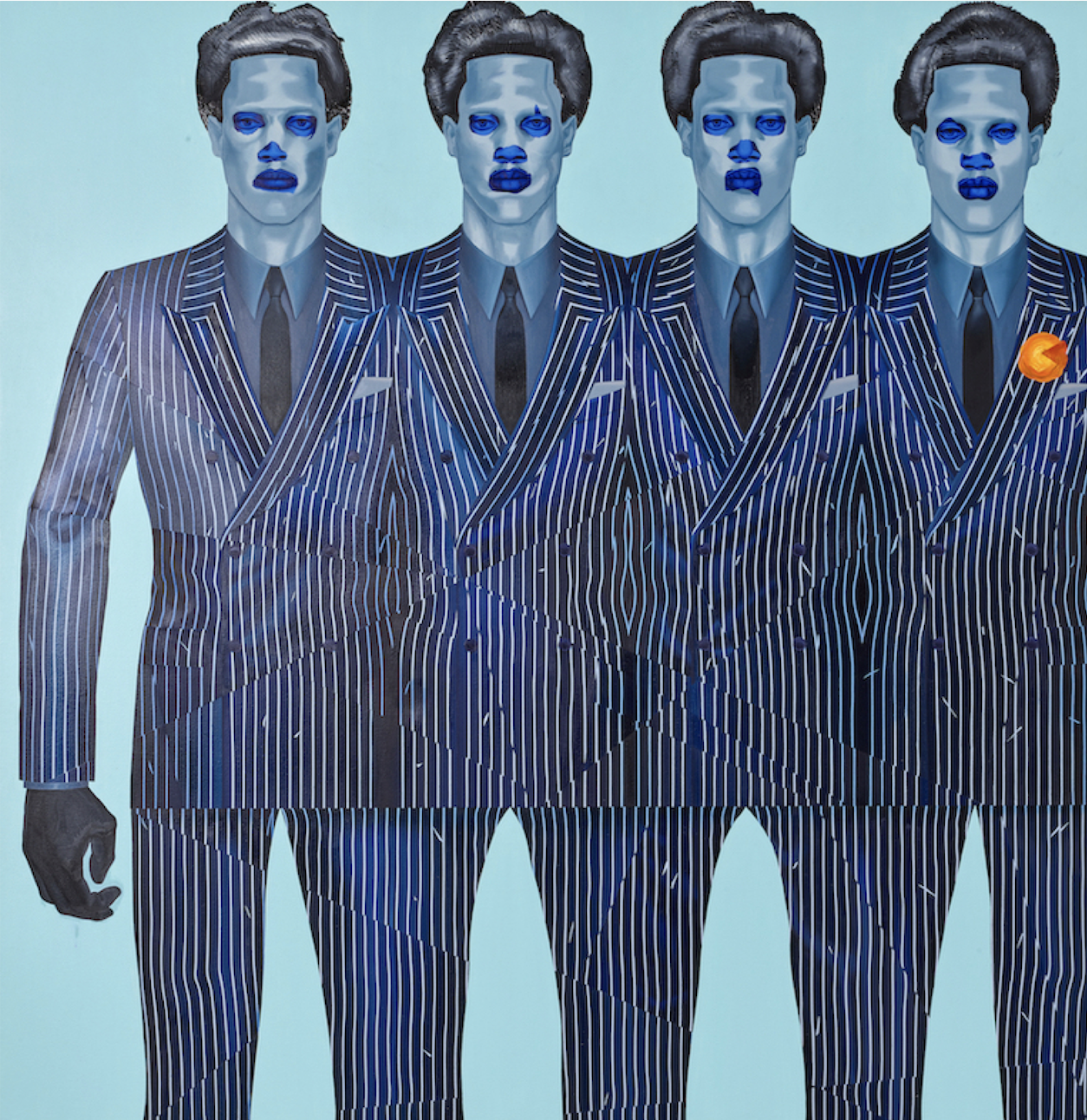 Jeff Sonhouse, Add 3/5 To The Blues, 2021, oil paint on canvas
You’ve talked about selectively revealing and concealing aspects of your figures — how do you decide what to obscure and what to expose in a given piece?
What I obscure or reveal is guided primarily by how materials can be altered to complement the painting’s formal components. The goal is for everything to coalesce into a visual language that can both reveal and conceal aspects of the figure. In my paintings, masks obscure the figures’ identities, while the unconventional materials adhered to their surfaces expose something of each character’s personality. This balance gives the viewer an entry into the figure’s interior world.
The diamond pattern and the figure of the Harlequin appear frequently in your work — what first drew you to that historical reference, and what does it allow you to say about identity today?
I first encountered the diamond pattern in Picasso’s recurring Harlequins and connected it to the Trickster figure in African, Black American and Native American folklore. I adopted the pattern from the Harlequin’s fitted costume to echo Picasso’s use of African masks and evoke the Trickster’s fluid identity — a form of self-preservation still practiced today.
You draw extensively from European painting traditions of the 20th century — how does that influence sit alongside the subject matter of contemporary Black identity in your work?
The influence of 20th-century European painting traditions has managed to sit comfortably alongside my subject matter. I think it is a testament to the comprehensive training I received at the institutions I attended.
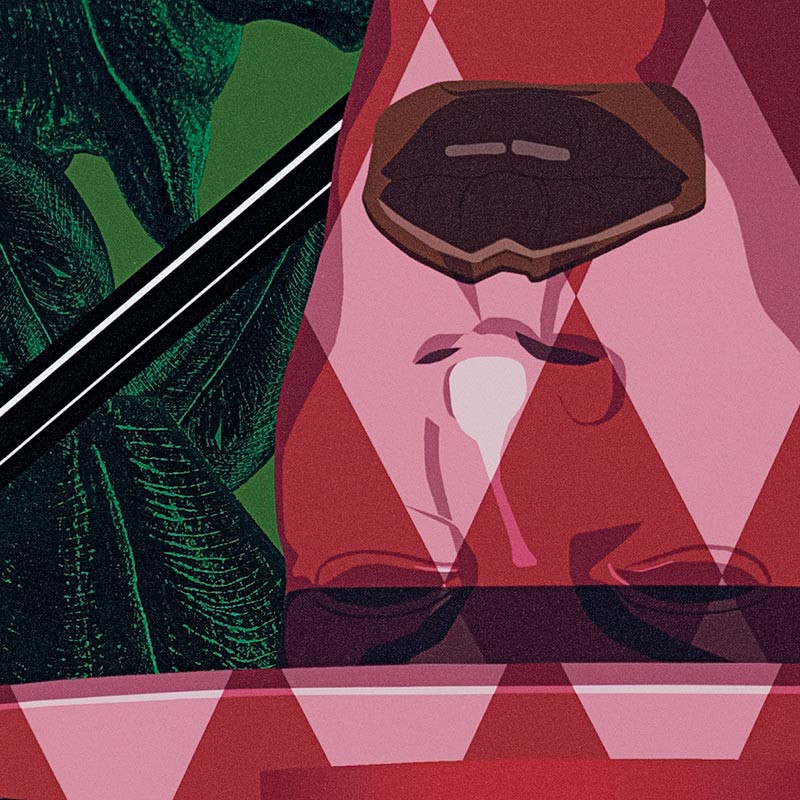
Can you tell us the story behind one of your editions — Poached or Codependence — what was the starting point?
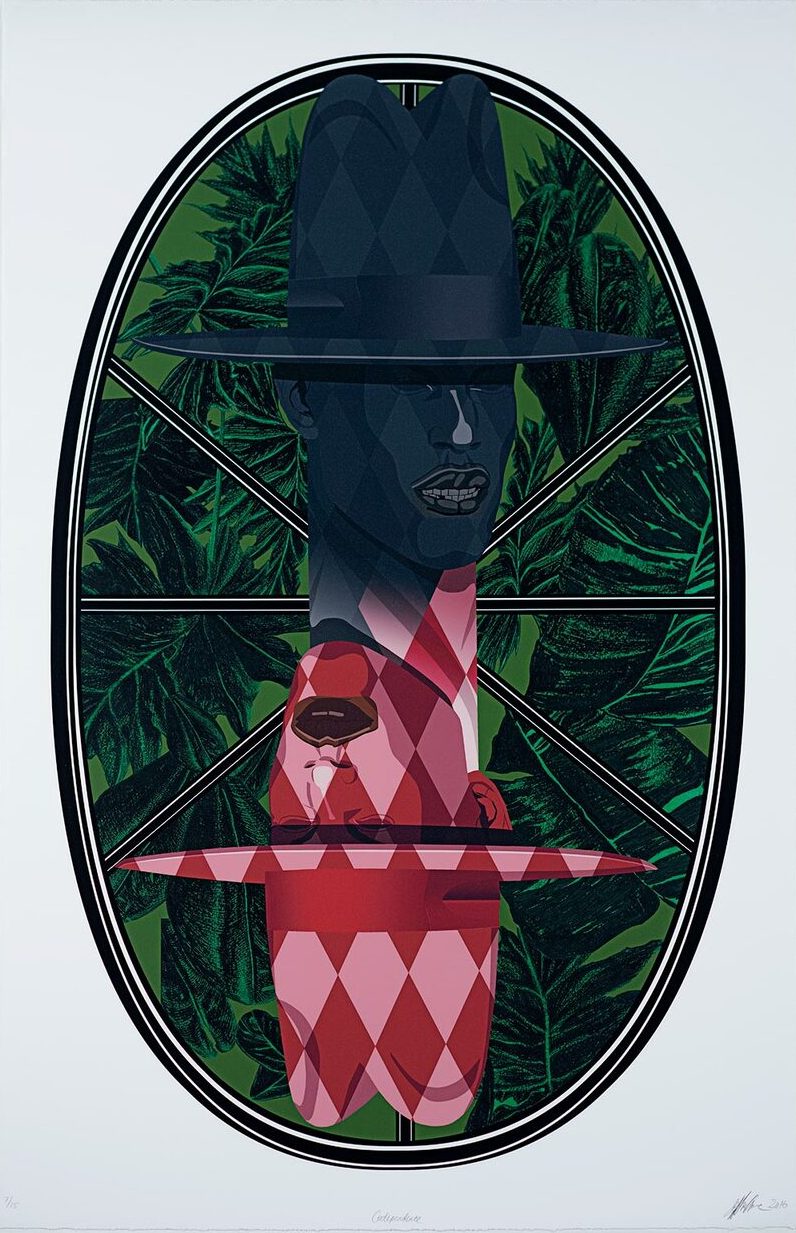
In Codependence, I set out to represent the unknowable experience of conjoined twins and to expand my pictorial language. In the process, I discovered that the diamond pattern could serve as a grid for a mask fitted to two identical heads.
You’ve described wanting viewers to consider the “dark undercurrents” of our socio-political era through historical parallels — is there a current moment or issue that feels especially present in your recent work?
I don’t recall what prompted that comment, but it may have reflected the uncertainty currently looming over our quality of life. Although I remain hopeful, I won’t pretend that what we’re experiencing isn’t a result of Washington doing business as usual — and those contradicting sentiments, rooted in the politics of hypocrisy, assist in how I calculate what makes for a good composition.
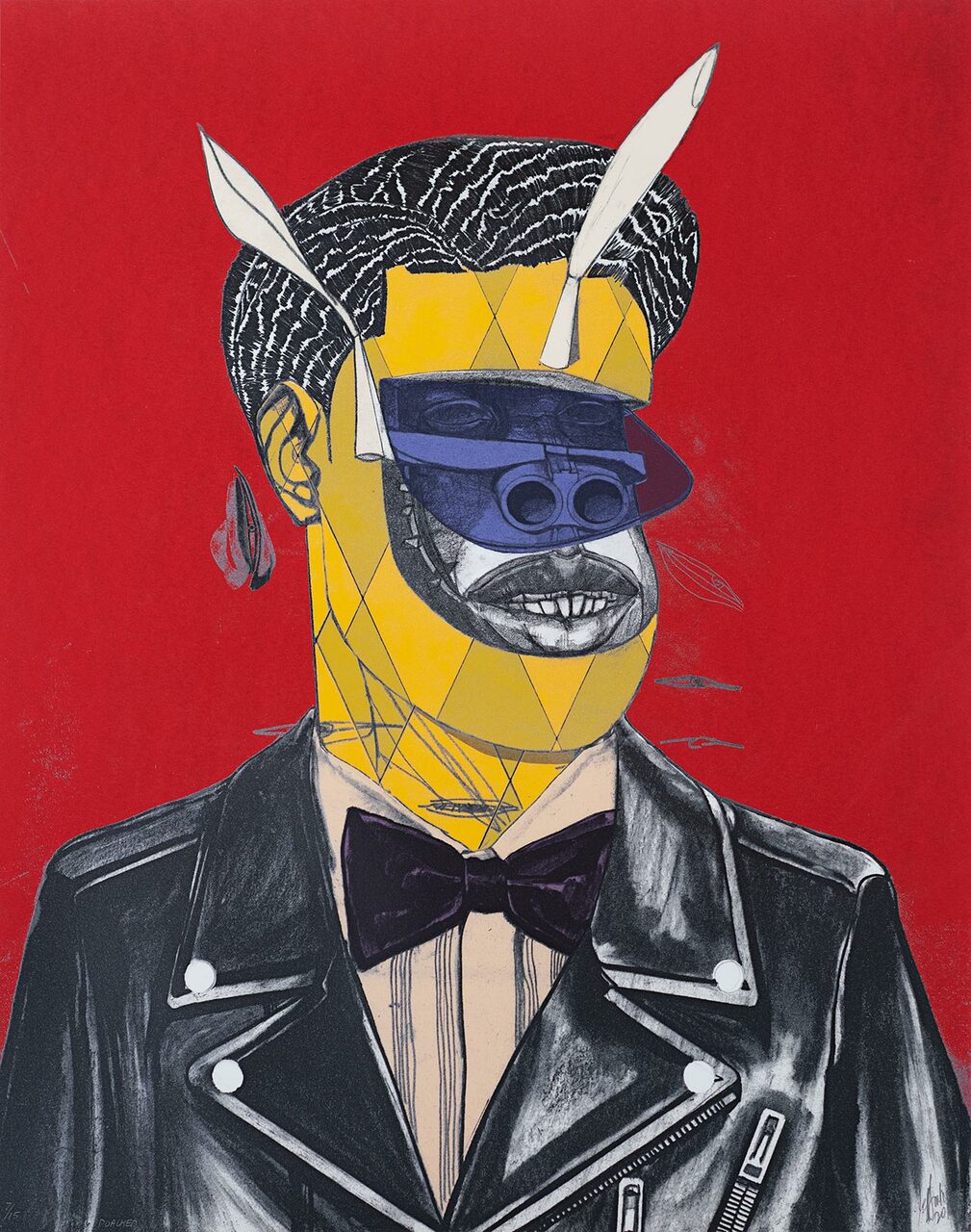
How has working across painting and mixed media changed the way you think about a subject before you even start a piece?
It has changed considerably from when I worked exclusively in paint to create representations of the figure. I am now required to consider how materials can be altered to allow the eye to travel easily across the composition.
Interested in adding a Jeff Sonhouse edition to your collection? Poached and Codependence are available now, exclusively on Haystack. Click here to learn more about Jeff Sonhouse.