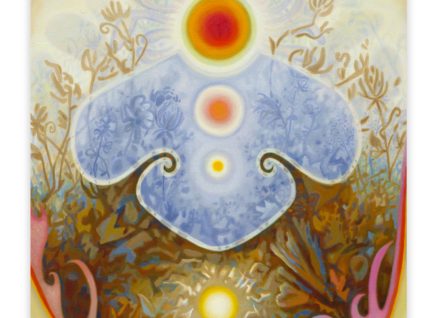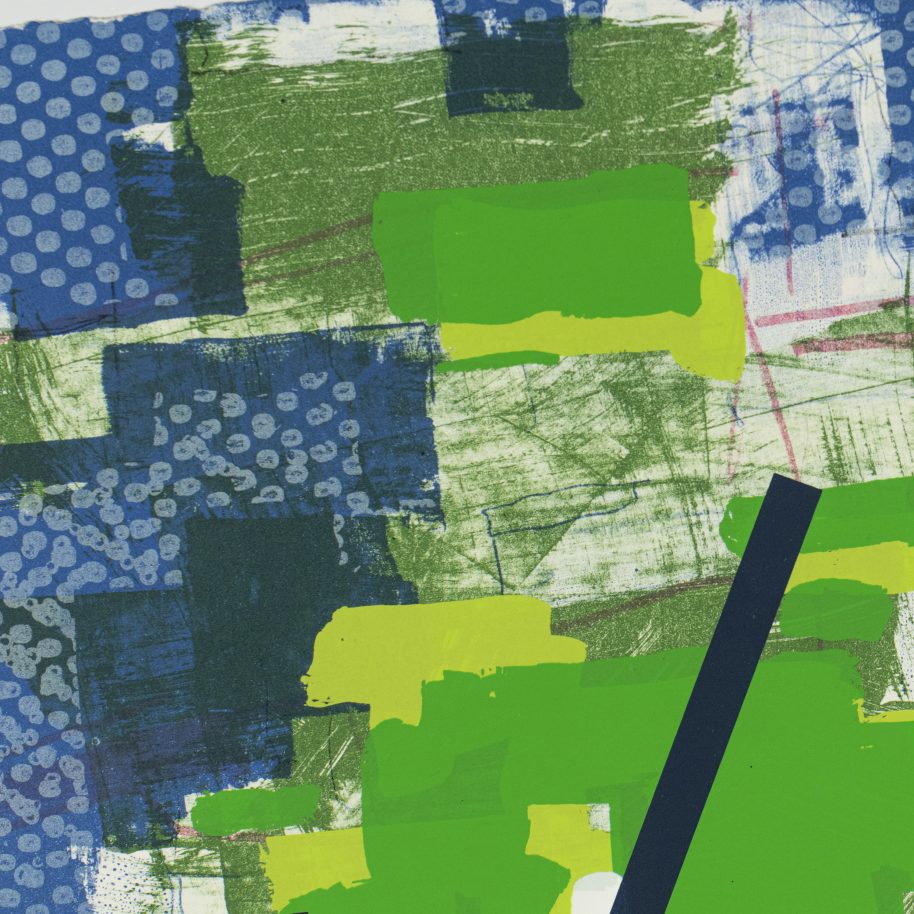
Jacob Hashimoto builds worlds from a single object. Working across sculpture, painting and installation, the New York-based artist layers thousands of hand-crafted kites, modular blocks and collage elements into accretive compositions that reference video games, virtual environments and cosmology — while remaining deeply rooted in landscape abstraction, modernism and handcraft. We spoke with Jacob about accumulation, collaboration and what it means to encounter one of his prints up close.
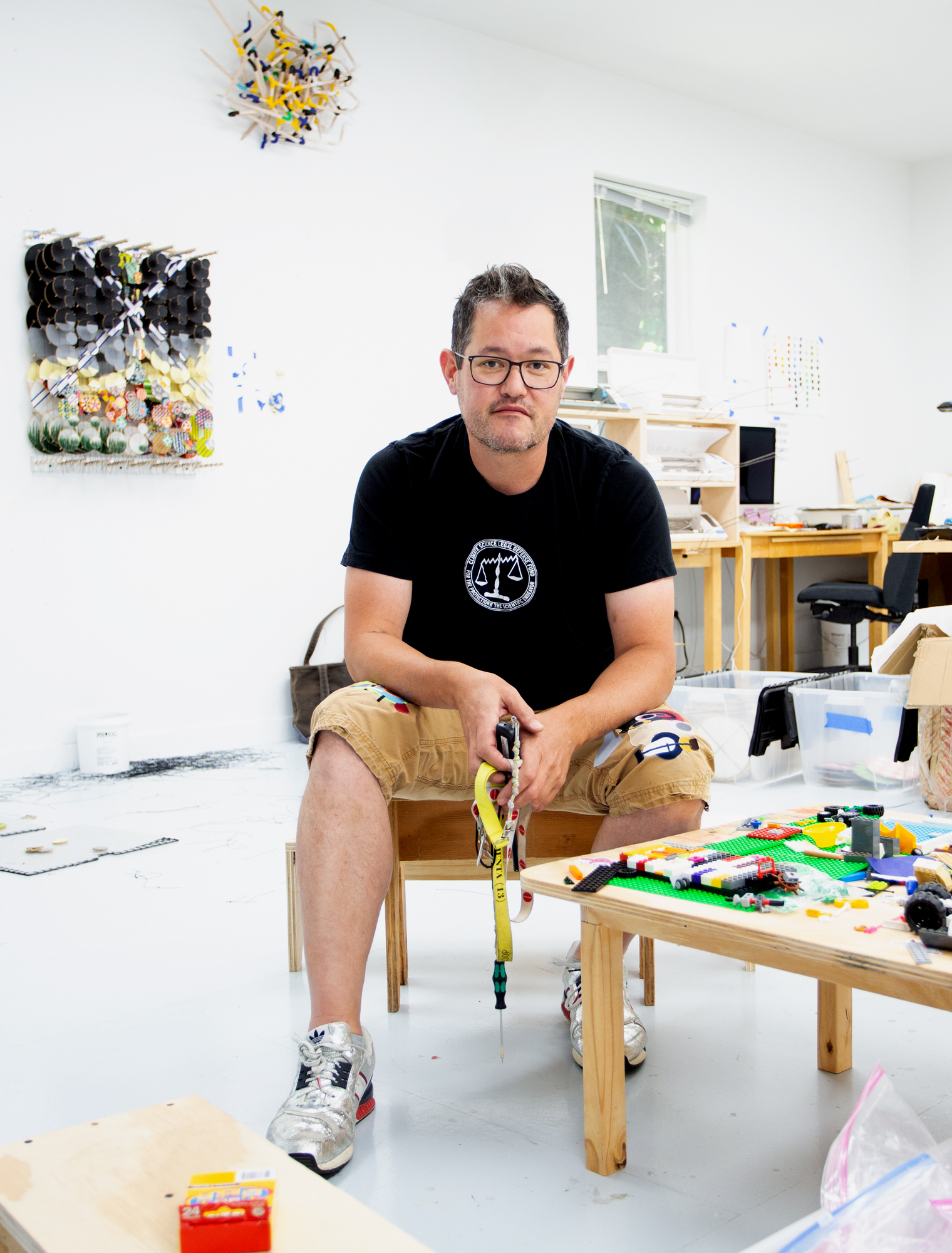
Your practice is built on accumulation — thousands of individual kites, blocks and elements combining into something much larger. What draws you to that way of working, and what does a single unit mean to you within the whole?
All of the world in an object, a moment, a gesture. Most things are aggregates of some kind or another, so it makes some kind of sense to work in accumulation. It’s something that we all understand on a fundamental, essential level. Through this language it’s possible to explore and build complicated systems that reflect our experiences in the world. Its language is open and invites interpretation, storytelling and possibility. Building large-scale sculptural installations out of one object doesn’t really change the fundamental meaning of the kite in my experience. The kite is this beautiful, pan-cultural object that is play, experimentation, self-discovery and meditation, all wrapped into one object. For me, its multivalence is its superpower. It carries intimate meaning and celebrates our individual, fundamental relationship with nature. Out of it, we can talk about the world; in it, we see something essential about humanity. It’s a nice place to start.
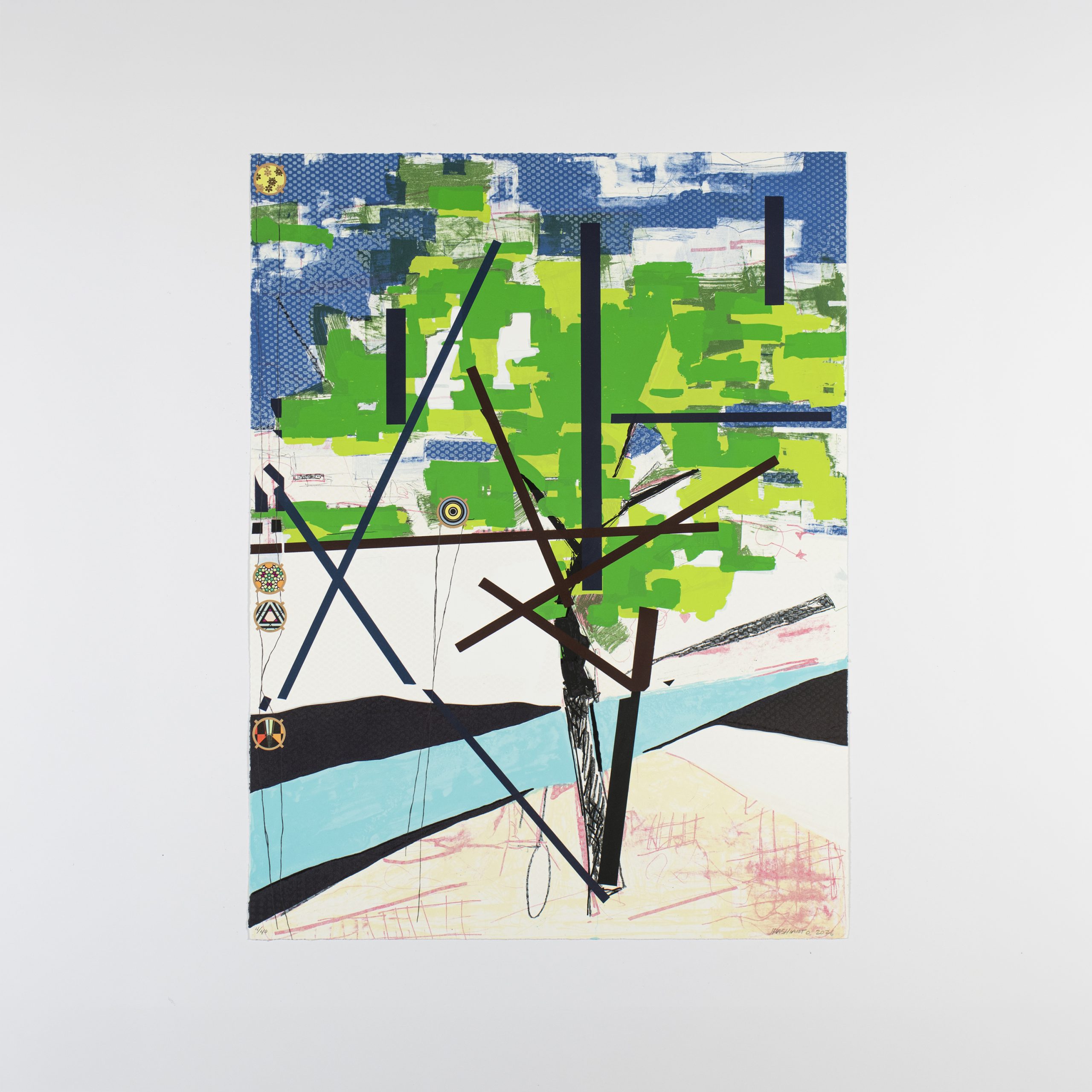
Your Haystack editions feel distinct from your earlier print work — what makes them different, and how did the collaboration with master printer Phil Sanders shape what they became?
There are many things that differentiate the Haystack prints from my earlier print work. All prints at this level are true collaborations with the master printer — in this case Phil Sanders — and as such, they benefit and are shaped uniquely by both the printer’s experience and my studio practice. At the time I was making these pieces, I was building tree-like motifs into the wall works in my studio. These tree-like gestures came directly from the studio, where I was working with the notion of prayer trees and wishing trees as armatures for landscape and pattern. It created a language that is noticeably different from past work and reveals, very clearly, ideas that often get quite buried in my normal studio practice.
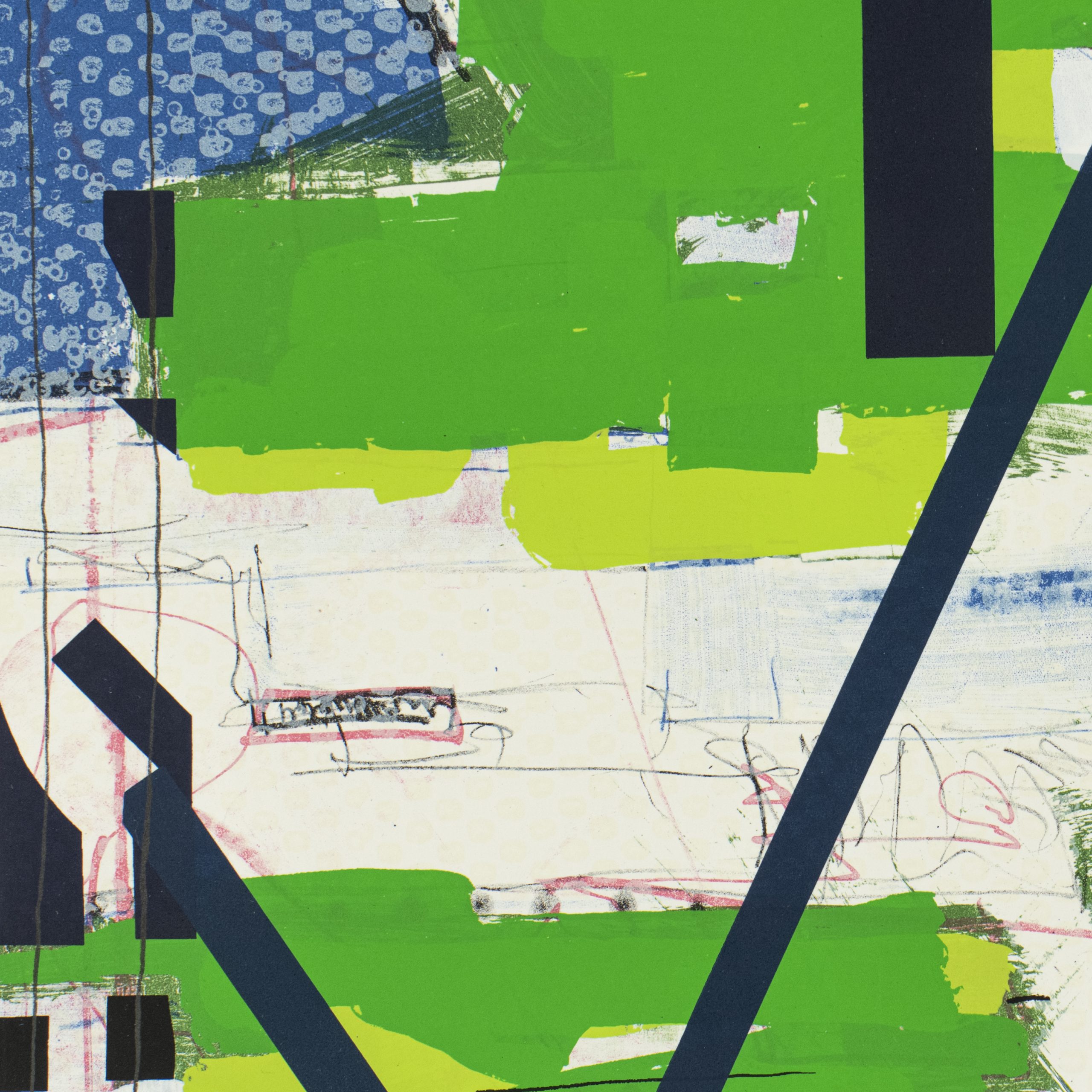
Your work draws on video games, virtual environments and cosmology alongside deeply handcrafted, analog processes. How do you hold those two worlds together in your compositions?
I’m not sure that I manage to hold both worlds together in my compositions. Often, I think they are foils for each other that force us into uncommon juxtapositions, parallel constructions and mutable interpretations. I come from the world of cassette tapes and CDs — a bridge generation between analog and digital — and the intersection of these technologies and languages is kind of generationally fundamental.
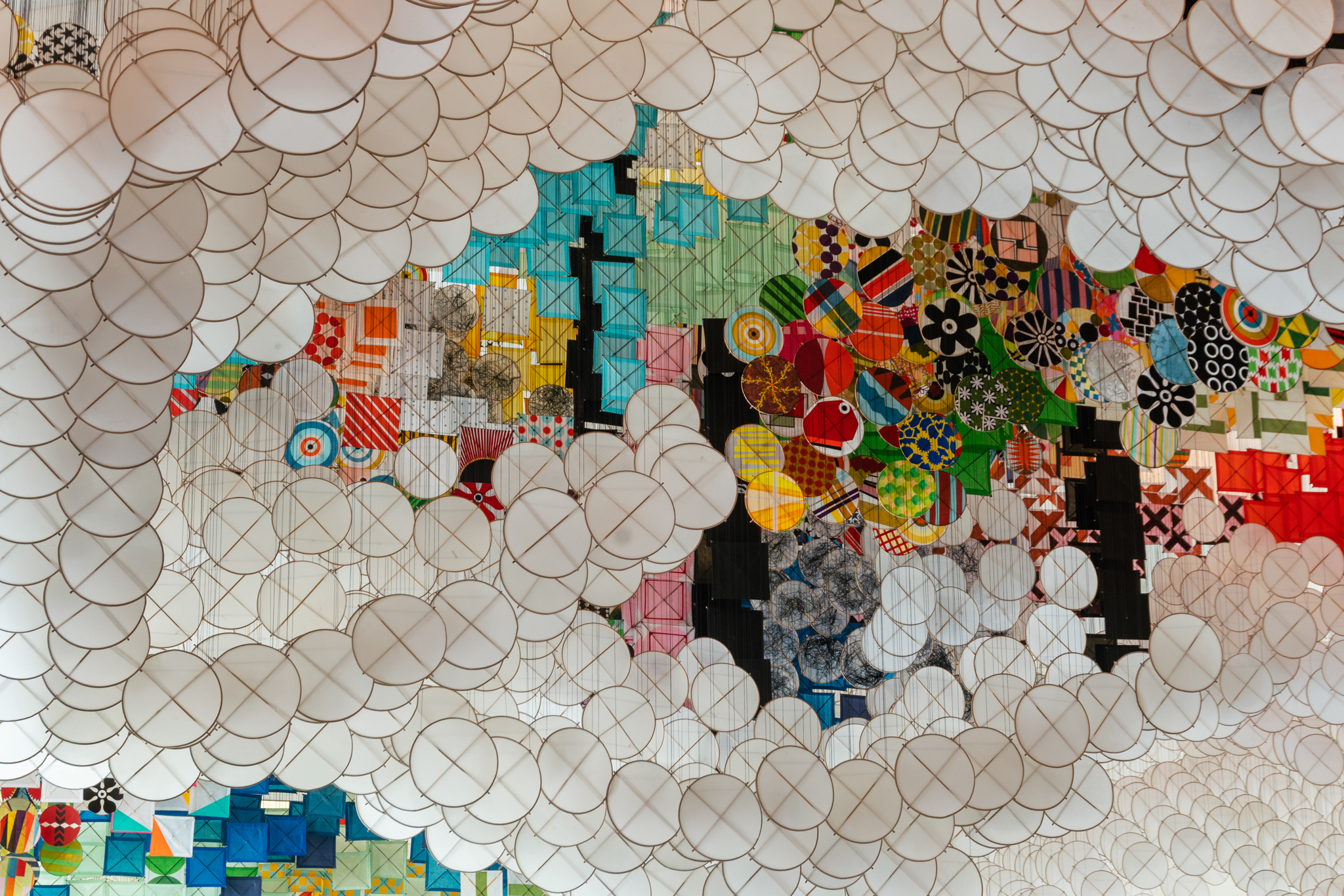
Your installation Giant Arc is currently on view at SFMOMA — your largest work to date. What did it teach you about working at that scale?
Giant Arc was a particular challenge, as it is so large and traverses some very complicated architecture. It was so big, in fact, that it became difficult to manage the composition and forced me into some surprising situations. It was, at times, quite stressful, scary and bewildering to work on — but hopefully my struggle with it made the work stronger, more surprising and dynamic. Most of the time, in smaller venues, I can navigate the gesture of the work intuitively and sometimes fluidly. But in this case, the scale forced me to manage multiple movements and gestures as they stacked on top of each other, creating Giant Arc.
Your prints and your installations share a layered, built quality — but the scale is so different. What do you hope someone feels when they encounter one of your prints in their home?
Explore Jacob Hashimoto’s recent edition: The Lone Survivor now available. Click here to learn more about Jacob Hashimoto.