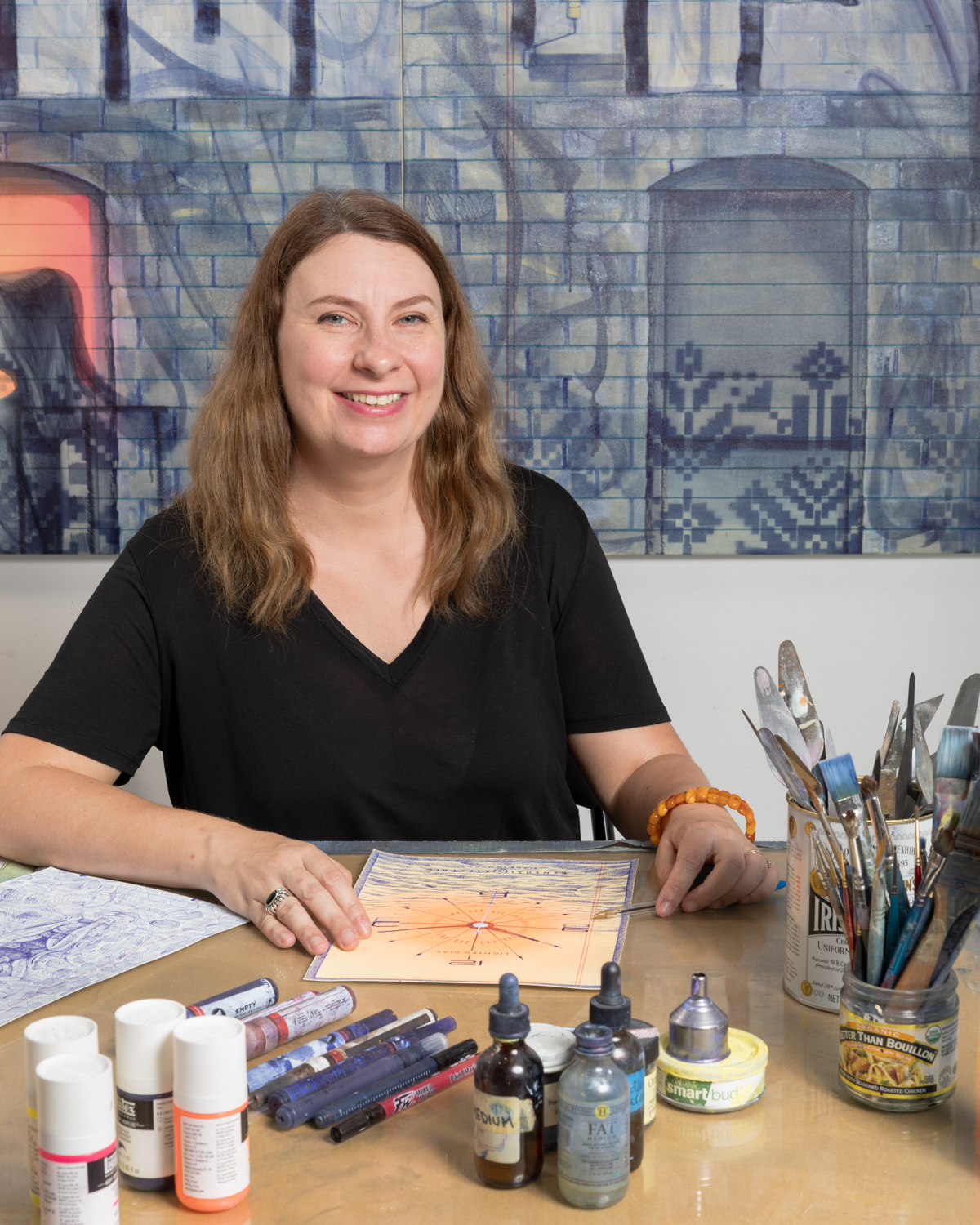
Meet Daina Higgins, a painter whose work moves between the overlooked corners of the urban landscape and the intimate spaces of personal and family memory. Rooted in her early years as a graffiti artist, Higgins brings a deep attunement to light, surface, and context — painting the spaces where marks are made as much as the marks themselves. Her journey from rail yards and rooftops to interiors shaped by history and loss has produced a body of work that is quietly searching and visually precise. We spoke with Higgins about her practice, her process, and the story behind her editions with Haystack, Blackbook I and Blackbook II.
You came up as a graffiti artist before becoming a painter — how did that background shape the way you see and choose the spots you painted in your urban landscape series?
As a graffiti writer, I spent a lot of time in liminal spaces — train tracks, drainage ditches, abandoned industrial buildings — and so naturally these environments became a subject for my studio work. Devoid of monuments and encrusted in layers of neglect, the main subject for these paintings is the play of light on a surface.
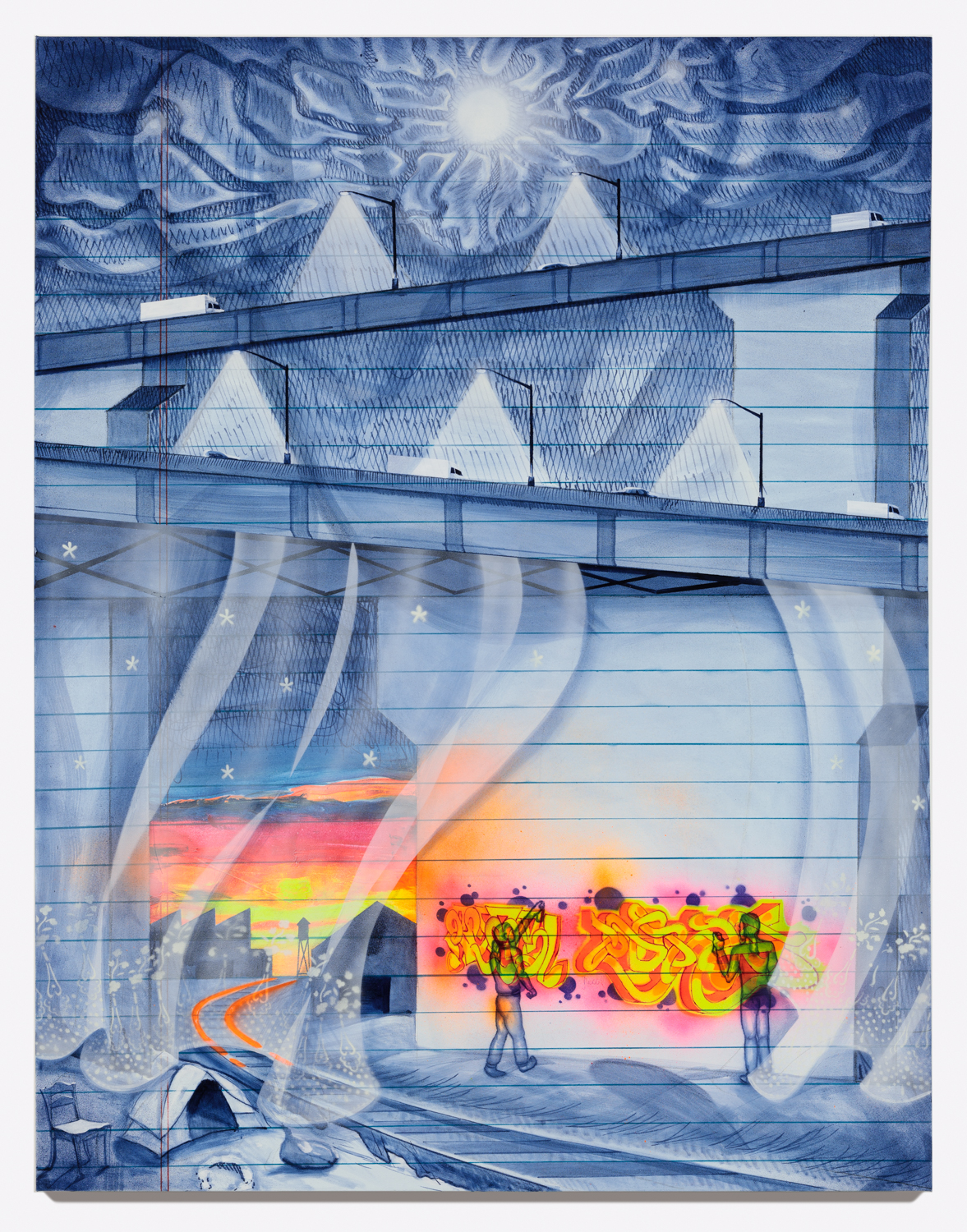
You went from painting overlooked and abandoned corners of the city to spaces inhabited by figures. What is the inspiration for these particular spaces and figures?
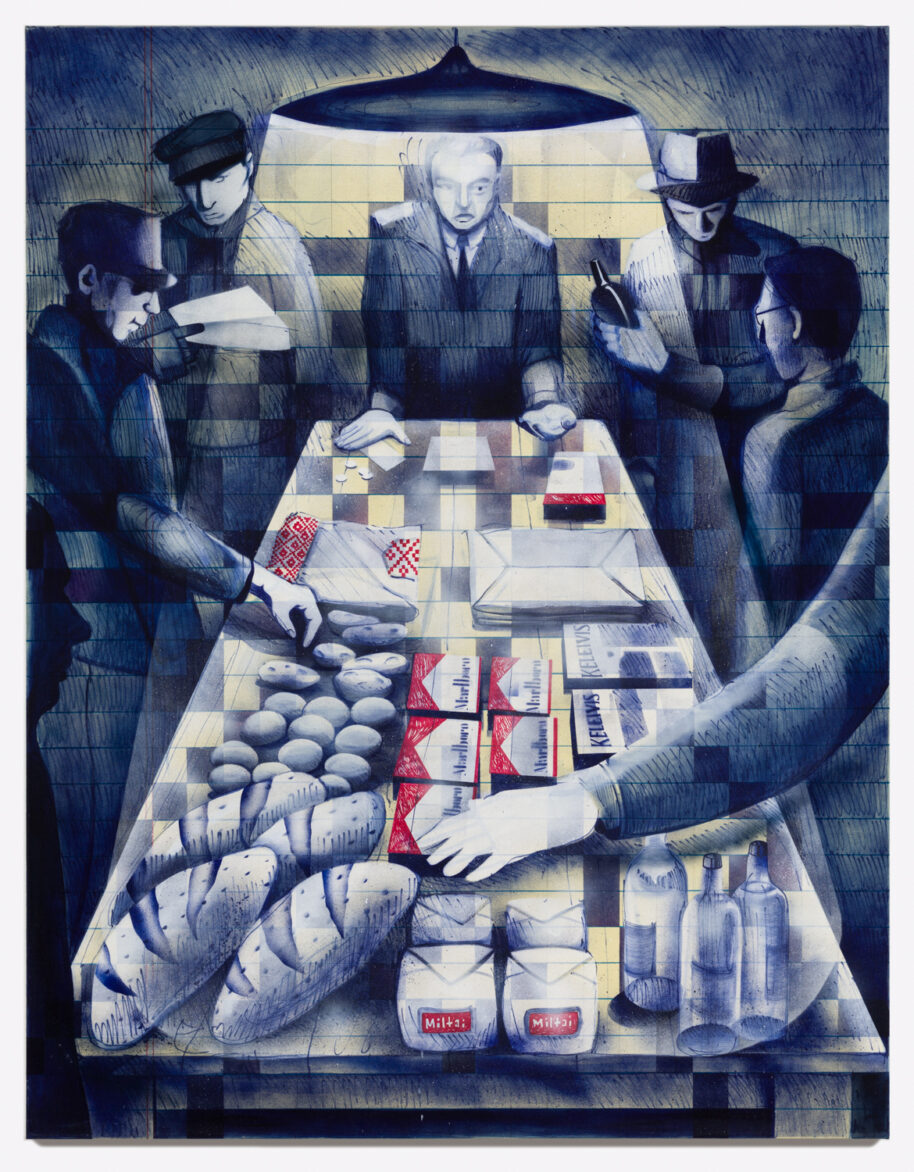
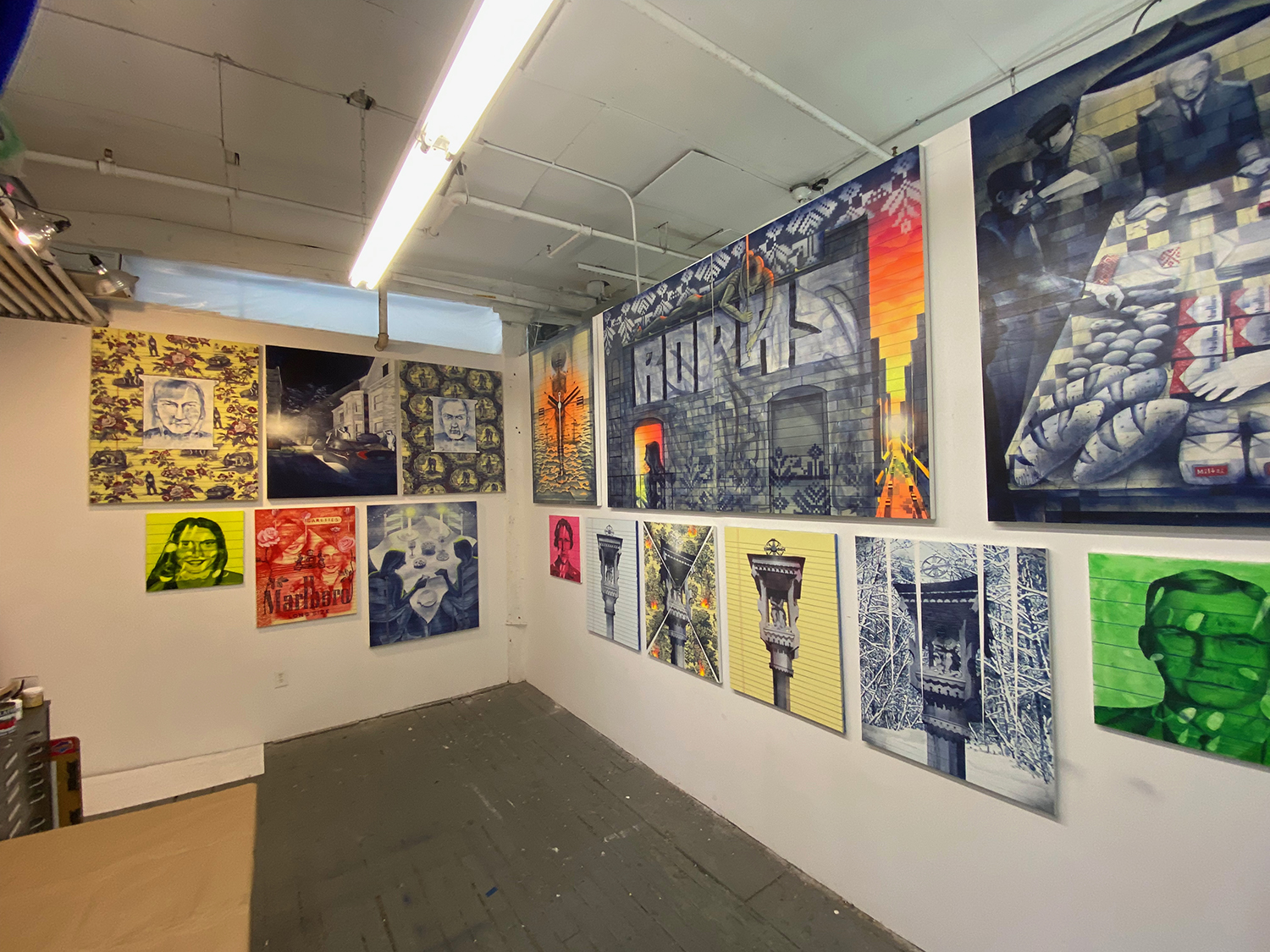
My recent work focuses on my family history and personal memories — the formation of an artist, or how one comes to choose art as a vocation. For me, it began with hearing about my mother’s arduous journey out of Eastern Europe during WWII, and then experiencing how our family was shaped by that history. After a cousin’s untimely death, I turned my rage into expression as a graffiti artist. In this work there are interior spaces based on family lore — storerooms and jail cells — and exterior spaces based on the places I inhabited as a graffiti writer, such as rail yards and rooftops.
What is the significance of photography to your painting?
As a graffiti writer, I used photography to document my work, while simultaneously studying photography in art school. I’m drawn to its documentary qualities and its ability to capture lighting situations that would be too fleeting to paint on scene. When I began my studio practice, I decided against painting graffiti on canvas because graffiti is about context — so instead, I painted the spaces where graffiti artists do their work. Right now I’m interested in the intersection of a memory of a moment and a photograph of it. I recently found a photo essay book called Refugees from Lithuania (Išeiviai iš Lietuvos) by Kazys Daugėla, published in 1992 by Mintis in Vilnius, Lithuania. He photographed the same displaced persons camp where my mother and grandparents lived after the war. While there are no photographs of them in his book, I feel more connected to a history I know only through a few small stories my mother told me before she passed.
Can you tell us the story behind your editions with us, Blackbook I and Blackbook II — what was the starting point for those pieces?
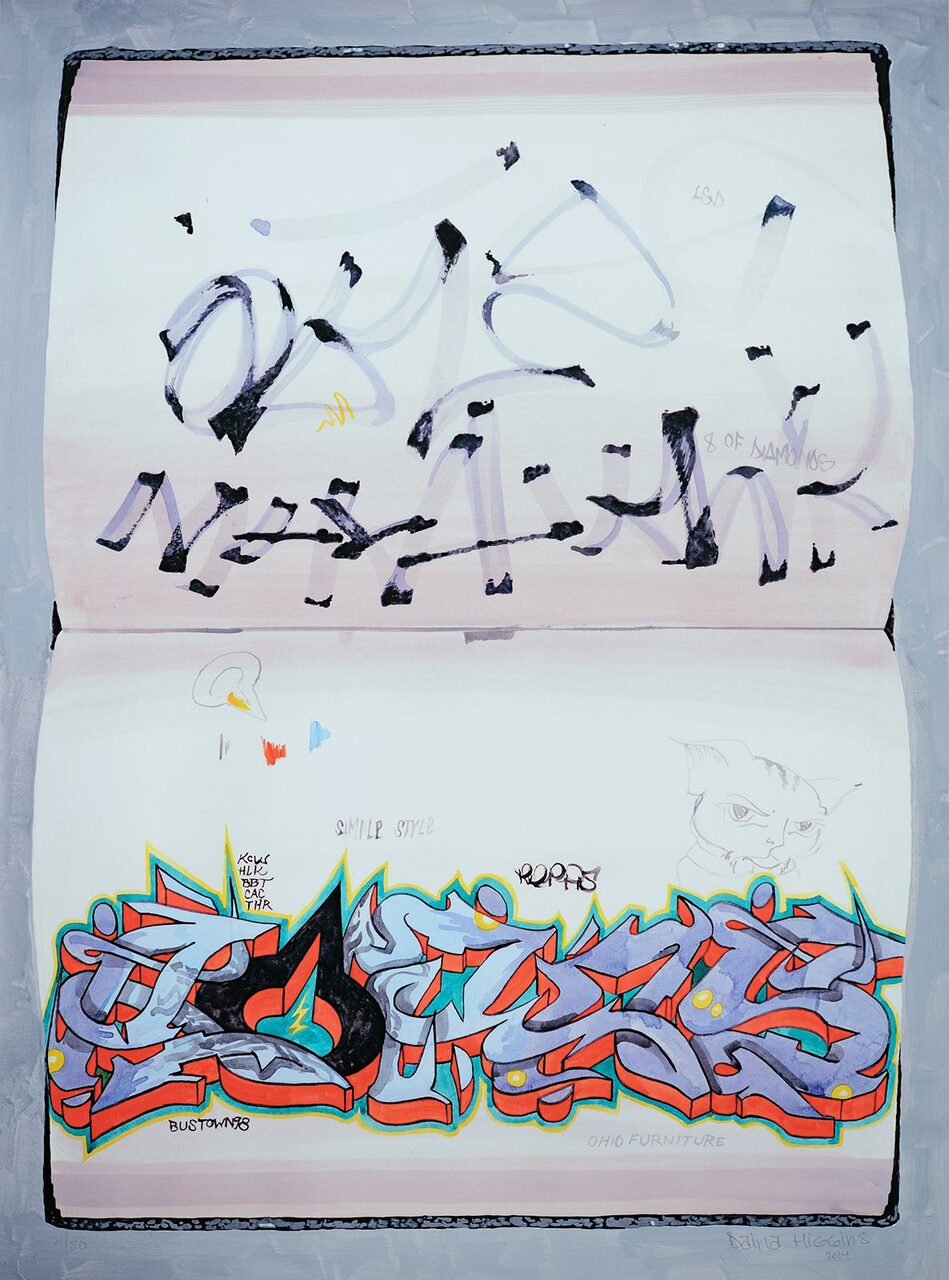
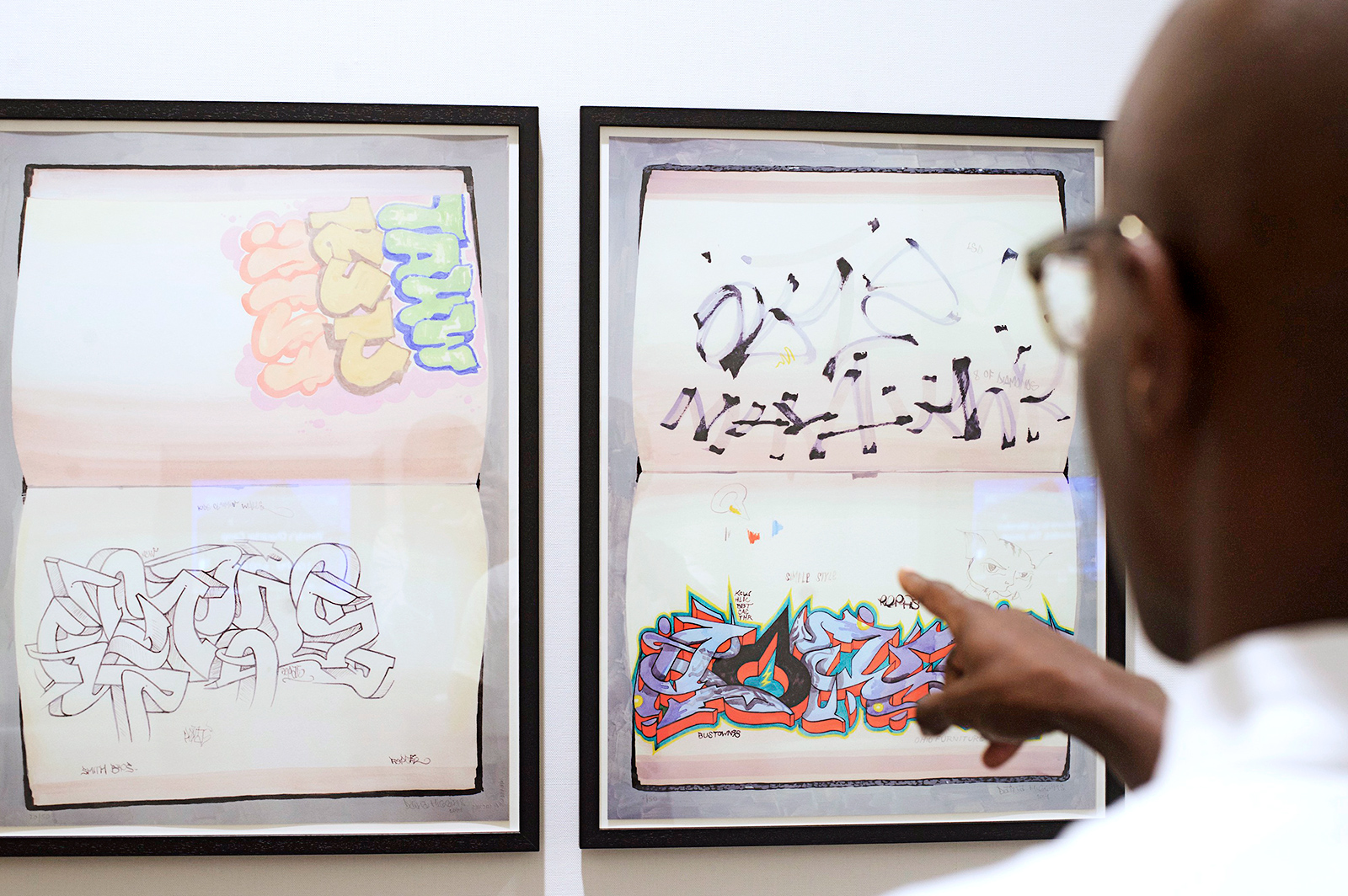
These editions were part of the Ohio Portfolio, commissioned by The Joseph Hotel in Columbus. At the time I was living in Philadelphia and was asked to create an Ohio-themed work. I chose a defining memory: carrying my graffiti blackbook — a sketchbook with a black cover — everywhere as a teenager. Using my actual blackbook as a subject, I opened it to a page showing a drawing for a significant piece I had done at Smith Brothers Hardware in 1996, and another showing a piece I had done on the rooftop of Ohio Furniture, both in Downtown Columbus. I painted a trompe l’oeil rendition of the open blackbooks, and the prints were created from those paintings.
How has your relationship to graffiti and the marks people leave behind evolved over your decades as a painter?
After a decade of painting exclusively in oils, I’ve returned to spray paint and stencils — this time combining all the mediums and inventing my own tools by filling graffiti markers with oil paint. Graffiti is an entry point into painting and art for many young people. The materials are portable and made to be used outside. As an artist with a tenuous studio situation, I know I will always have a canvas outside.
Interested in adding Blackbook I or Blackbook II to your collection? Click here to learn more.