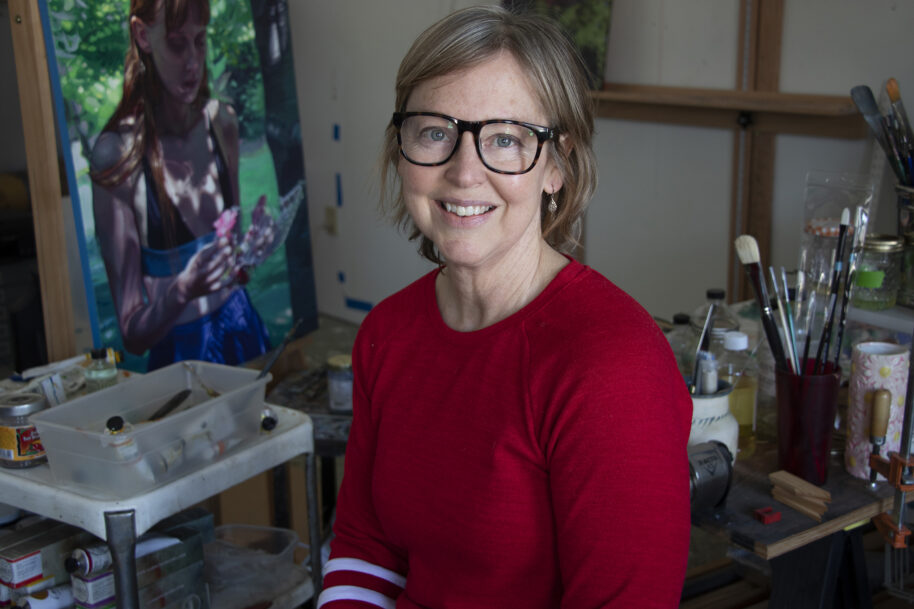
Meet Laura Sanders, a painter whose work explores the inseparable relationship between the human figure and the natural world. Through immersive compositions of water, light, and landscape, Sanders reveals how the environment shapes us — literally and visually — leaving its imprint directly on the body. We spoke with Sanders about her process, her subjects, and the edition she created with Haystack.
You’ve said “when we change the environment, we change ourselves” — how did you arrive at that idea, and how does it shape the way you choose your settings and subjects?
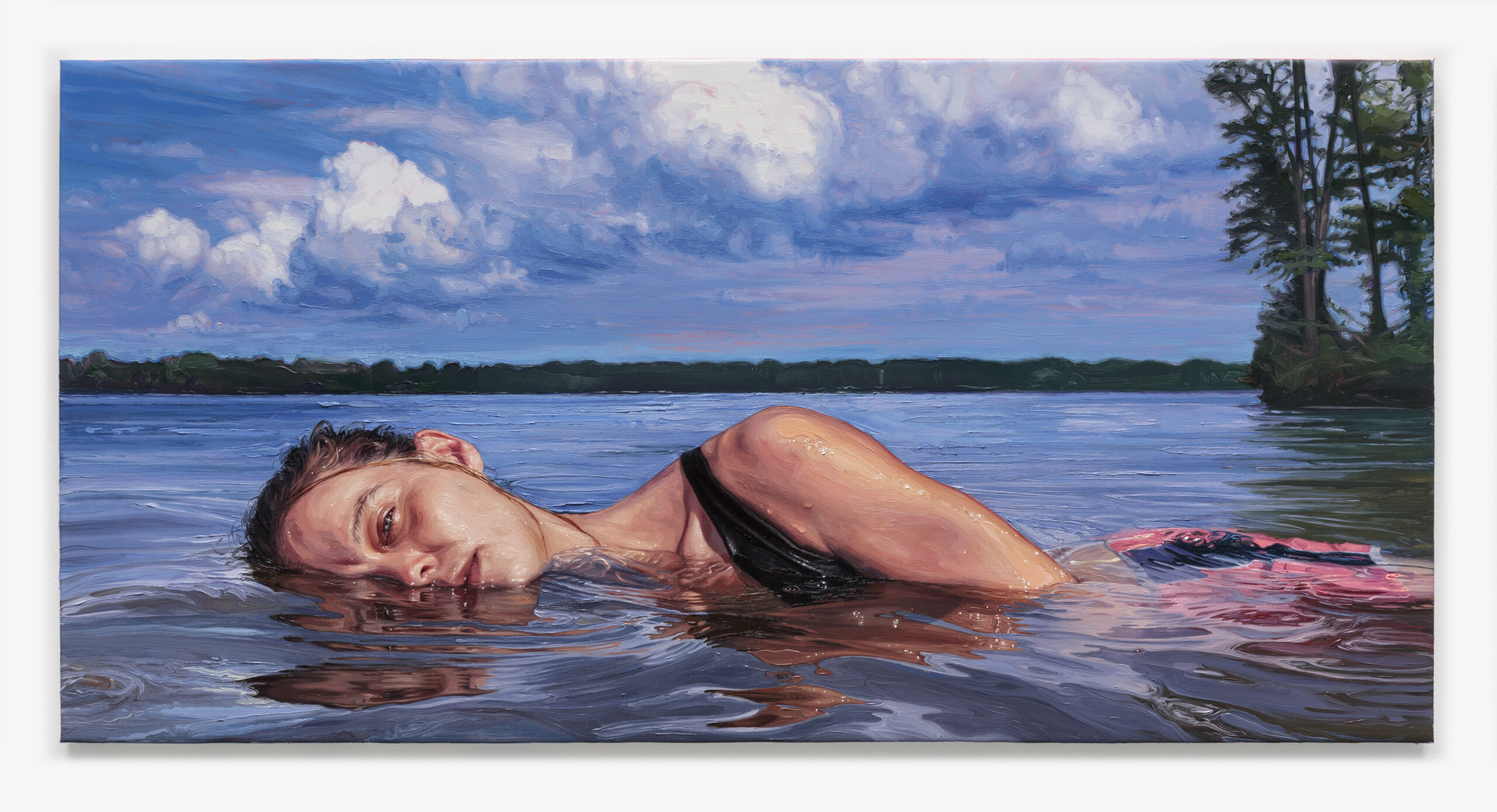
The idea that we are all interconnected may sound cliché, but research increasingly confirms it. From mercury released by burning coal that returns in rainfall to contaminate our food supply, to microplastics we inhale with every breath, our bodies are inseparable from the environment. I have been interested in visually showing the elements of water, light, and air as they touch the body — especially light, because before it even hits the figure, it has been shaped by the environment it passed through. Many of my paintings are composed almost entirely of the body, with little of the surrounding landscape visible. Instead, the environment is revealed through the imprint it leaves directly on the figure. I love to paint the patterns of forest leaves and distort features with light and water. In recent work, I have been thinking about the forest’s beneficial effects on the human body — particularly how trees emit airborne compounds called phytoncides that reduce stress and strengthen immunity.
Water shows up again and again in your work — what draws you to painting it, and what challenges does it present compared to other elements?
When I began painting, I always knew I wanted to show the figure in relation to the natural environment. Water seemed the most direct way to convey the feeling of being completely enveloped by one’s surroundings. Being immersed in water creates a visceral feeling of connection to the world outside the body in a way that our everyday experience of air — which we often perceive as empty space — does not. Yet we are always in contact with the physical environment, even when we are not consciously aware of it. Some might see water as challenging to paint because of its transparency, reflection, and constant movement. I find those qualities fascinating and sometimes difficult, which keeps it interesting. Water also has volume, and that is what I enjoy painting most. I am drawn to giving form and substance to my subject matter, making them feel physically present.
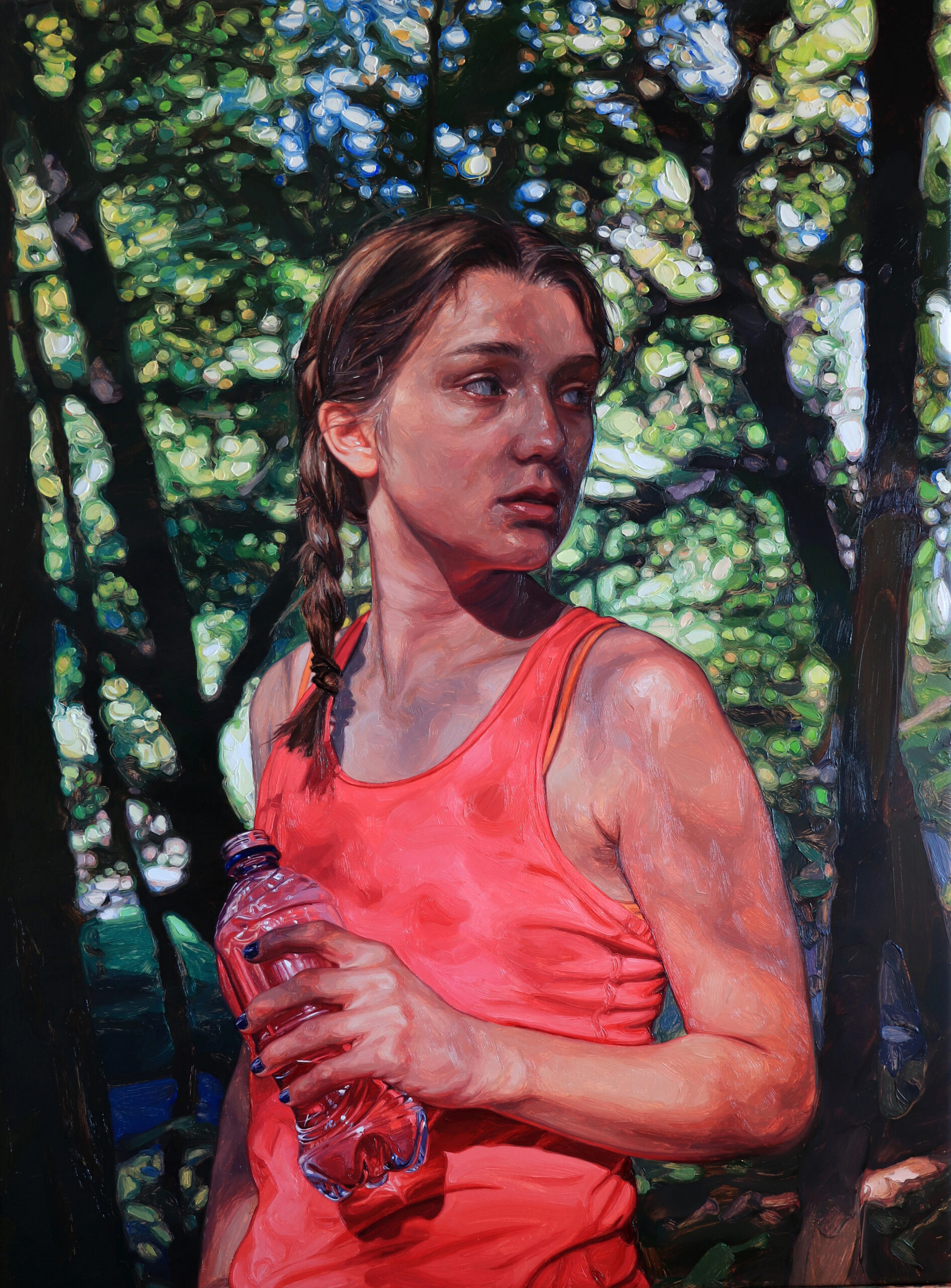
You work wet paint into wet paint and reference photographs without trying to replicate them — can you walk us through what that process actually looks like at the easel?
I first create images through a photoshoot, then arrange the composition on the computer. I am very observational when I paint, looking at the image and responding to it directly. I love the process of taking a flat image and creating depth and transparency with paint — simplifying and exaggerating, essentially playing with the many ways it can be expressed. Working wet-on-wet allows me to continue in an unbroken flow, where the colors and shapes of the paint interact with one another.
Your figures are often placed in immersive, almost vulnerable relationships with water and landscape — what do you want viewers to feel about the figure’s place in that environment?
In my earlier work, I explored the figure’s vulnerability to the forces of nature, and later the vulnerability that women experience within natural environments because of human threats. As my work has evolved, I have continued to explore the reciprocal relationship between people and the environment.
How has living and working between Long Island City and Columbus shaped your relationship to landscape and environment in your work?
Contrast is always valuable. If my baseline is Columbus, then spending time in New York City expands my perspective. I like experiencing those extremes, and the contrast always fuels my creativity.
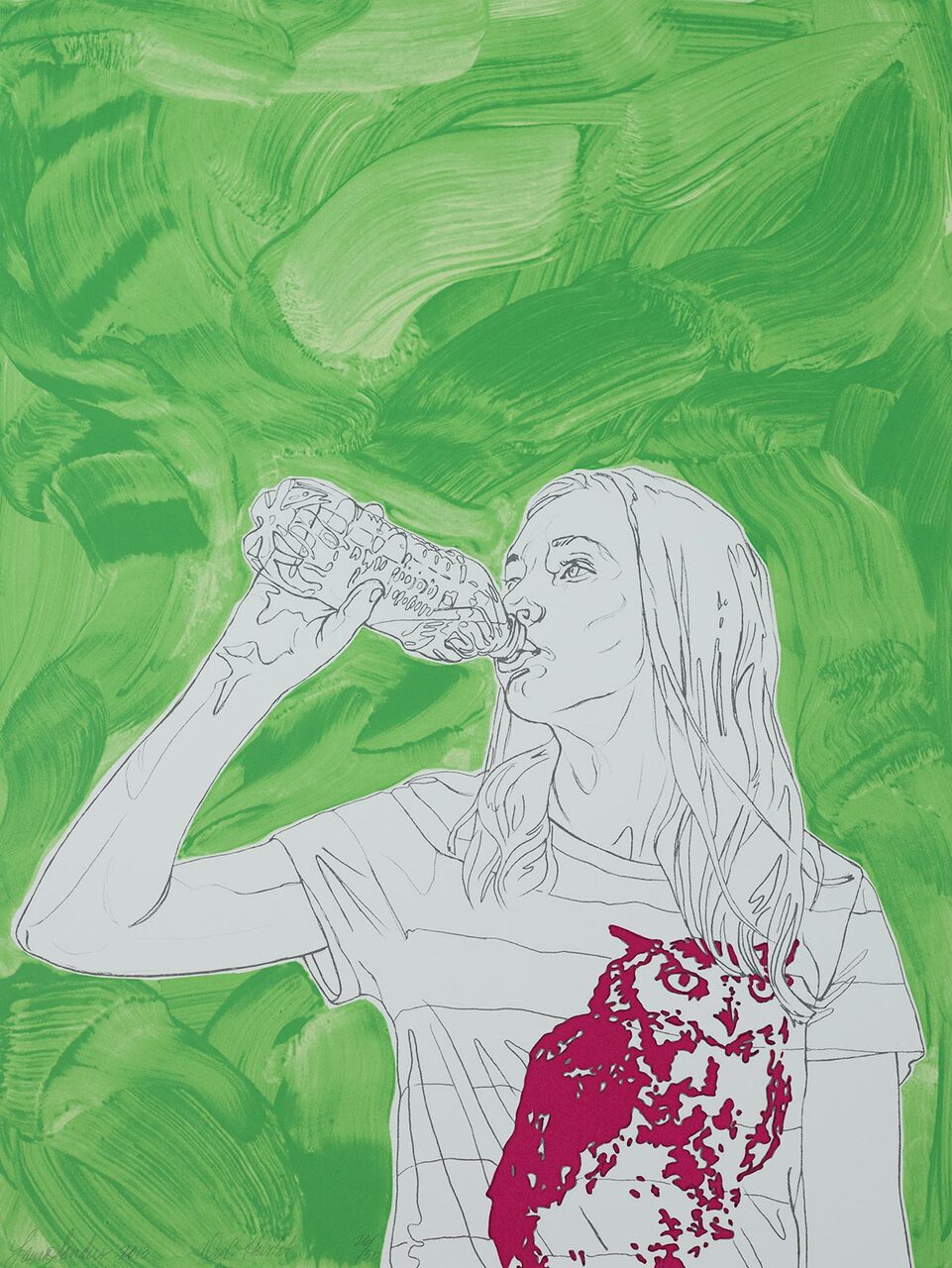
Interested in adding Sander’s edition to your collection? Click here to learn more.