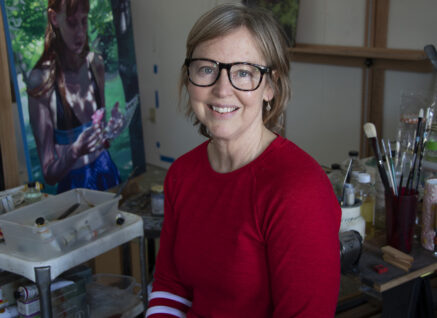
Detroit-born painter Carrie Moyer has spent decades building a practice that sits at the intersection of geology, humor and abstraction. Working with pumice, powdered minerals, metal and graphite alongside acrylic, she creates compositions that echo the scale of geological shifts, the sweep of winds and the rhythm of orbiting bodies — while never losing sight of the wry, surrealist humor that runs through everything she makes. A Guggenheim Fellow whose work has been shown at the Whitney Biennial and is held in the permanent collection of the Metropolitan Museum of Art, Moyer brings both gravity and levity to the canvas in equal measure. We spoke with Carrie about master printers, visual puns and what happens when a 10-foot painting becomes something you live with every day. Explore Moyer’s Haystack edition, Mommy Long Legs now.
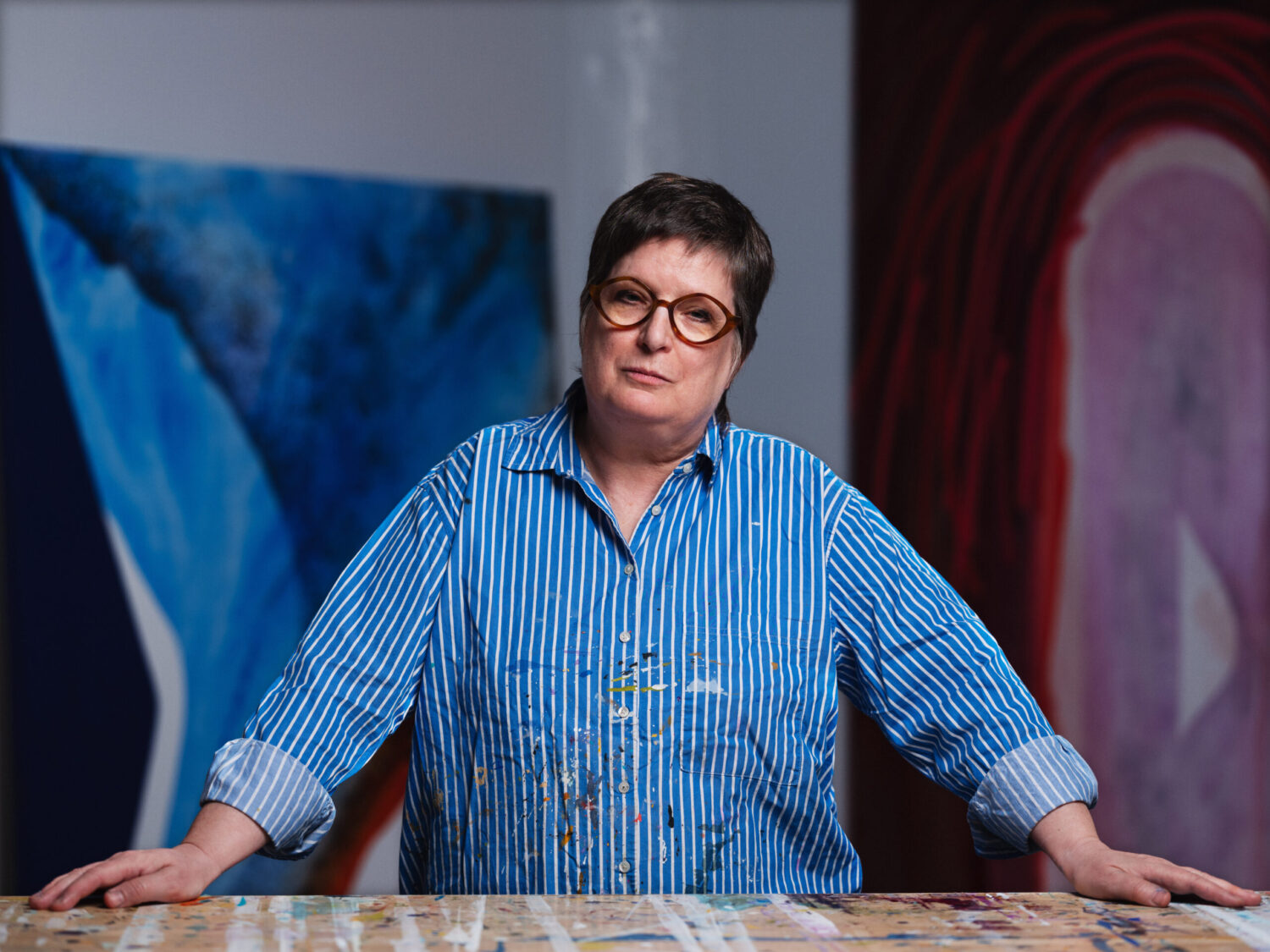
Mommy Long Legs is a 17-color screenprint produced using the à la poupée technique — a method that allows multiple colors to be applied in a single pass. What drew you to that particular process, and how did it shape the final composition?
After visiting my studio and studying my process, Luther Davis suggested we go with à la poupée. Working with a master printer like Luther is comparable to working with a genius conductor of a very fine orchestra. He made a scan from a high-resolution photograph of the original painting and then extracted aspects of the tactile, light-catching surface, translating them into graphic form. You’ll notice that almost every discrete shape has its own distinct texture.
Your paintings incorporate pumice, powdered minerals, metal and graphite alongside acrylic — materials drawn from geological and alchemical traditions. How much of that material thinking carries over into the printmaking process, where the medium is so different?
Acrylic paint is essentially polyurethane, and the joy of using it comes from the interaction of transparent colors. The powdered minerals, pumice and magma become suspended in the material, creating a kind of baseline geology and new light conditions. I’m interested in giving the viewer different kinds of visual and tactile information depending on how far they are from the painting. With printmaking, the graphic, hard-edged nature of my work takes center stage. I’m less concerned with moving the eye from texture to texture than with the narrative or storytelling aspect of the image.
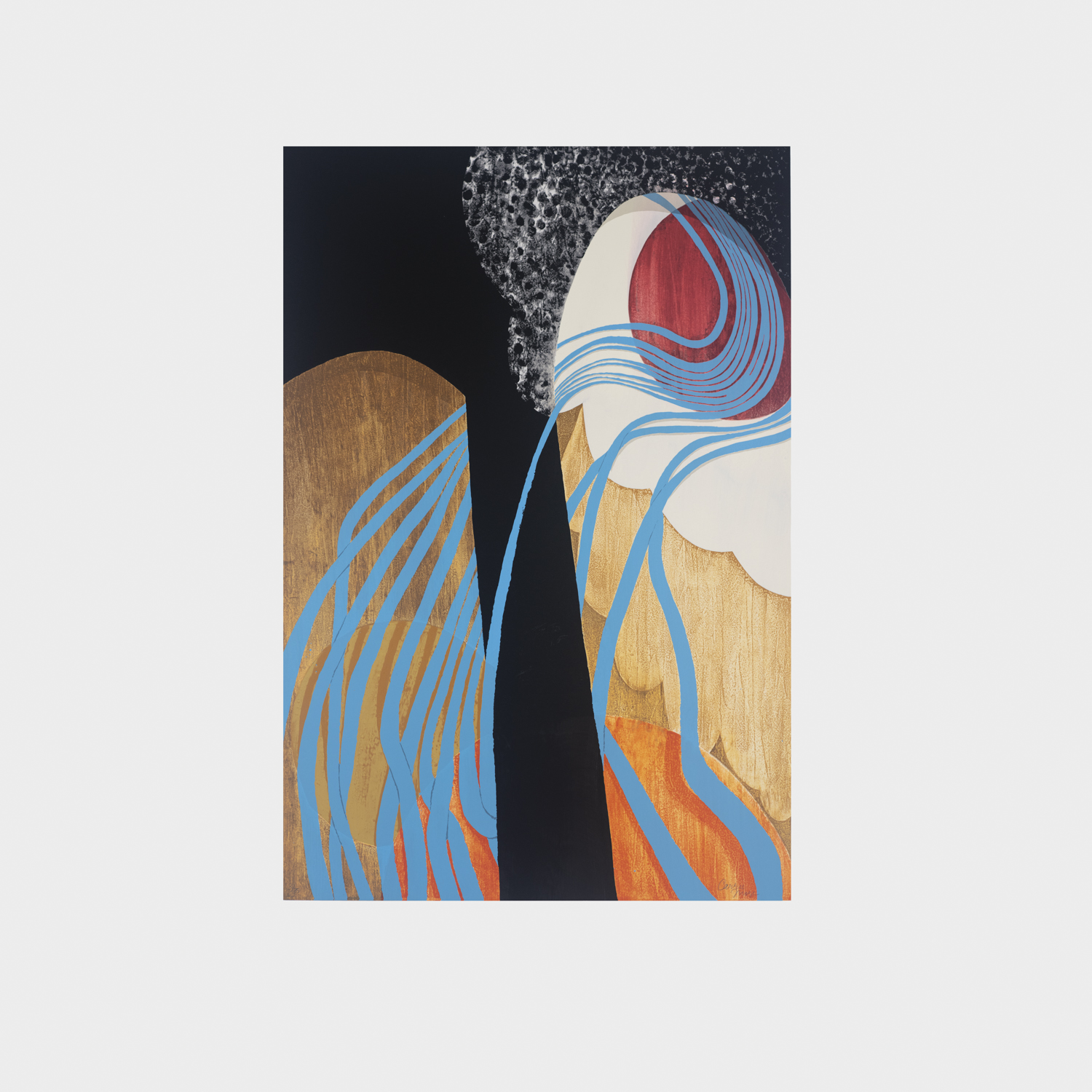 Carrie Moyer, Mommy Long Legs, 2025, 17-color silkscreen with à la poupée, edition of 35
Your work consistently evokes a sense of weight, movement and suspension — the sweep of winds, the rhythm of orbiting bodies. How do you create that feeling of physical force within a two-dimensional surface?
My earlier prints were based on images composed specifically for that project. With Mommy Long Legs, I’ve made a totally new print based on an earlier painting by the same name. This meant almost flattening all the dynamic elements of the composition — from the arched “windows” to the cloud made of disappearing fingerprints to the rush of electric blue lines — to map out the energy as it moves through the picture.
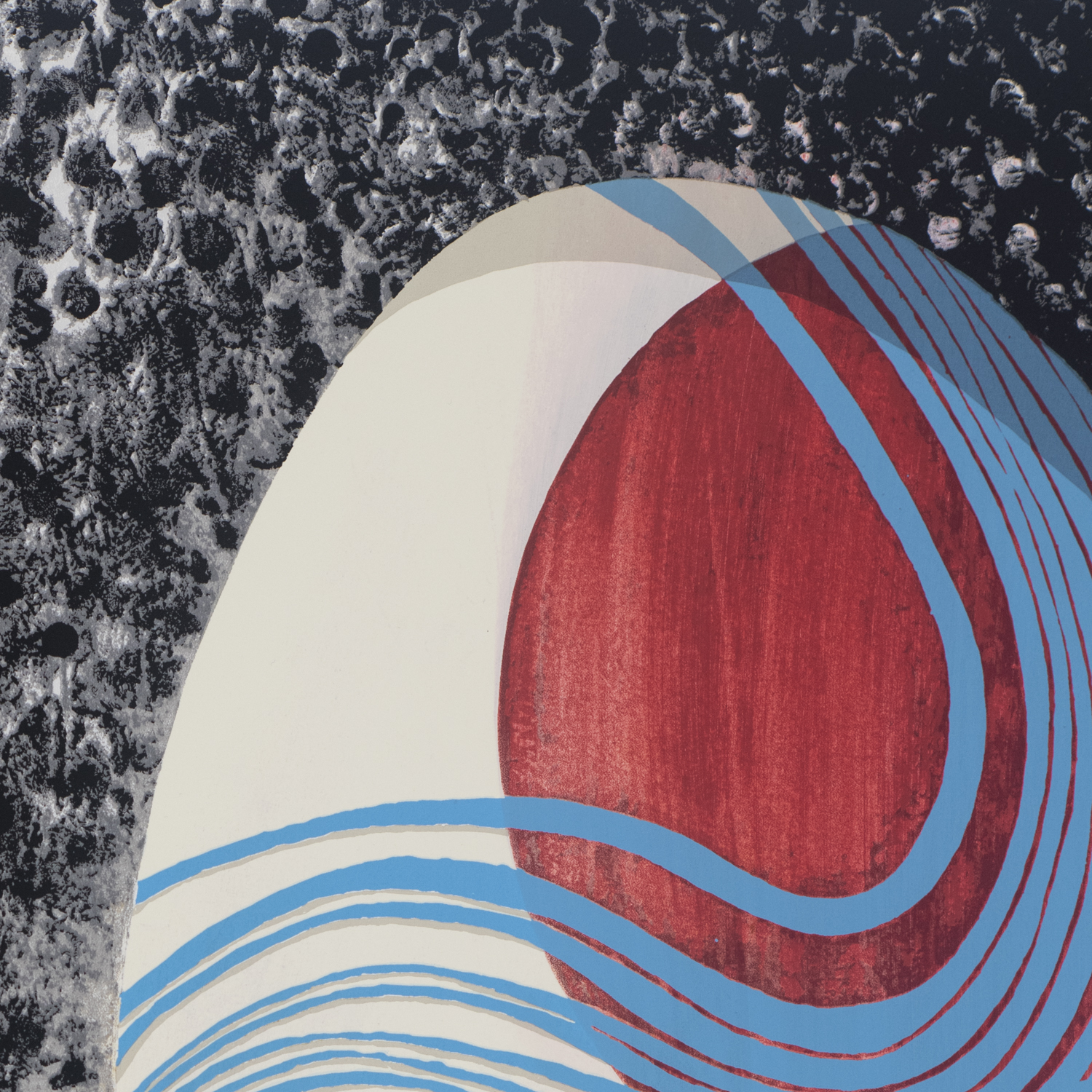 Carrie Moyer, Detail of Mommy Long Legs
Your Haystack perspective notes that your paintings “highlight both the gravity and humor of the human condition.” Mommy Long Legs certainly carries that duality in its title. How does humor function in your practice — is it intentional, or does it arrive on its own?
I’m really interested in visual humor. This might come from the use of a startling color, an impossible shadow, or something else that feels awkward and out of place. My work uses all kinds of shapes that, at first glance, might appear to be vaguely recognizable, only to turn symbolic and then abstract the longer one looks. These slippery juxtapositions and visual puns go back to my love of all things surrealist.
Your paintings operate at the scale of geological shifts. A limited edition print is something much more intimate — lived with at home, at eye level. Does that shift in context change what you want the work to communicate?
Lately I have been working as much on paper as on canvas. Works on paper, whether singular one-offs or editioned prints, have an intimacy that just isn’t present in a 10-foot painting — my normal size. When works are scaled for domestic spaces, the viewer gets to engage with the artist’s touch and mark-making in an entirely new way. Being in close quarters with art is good for communication.
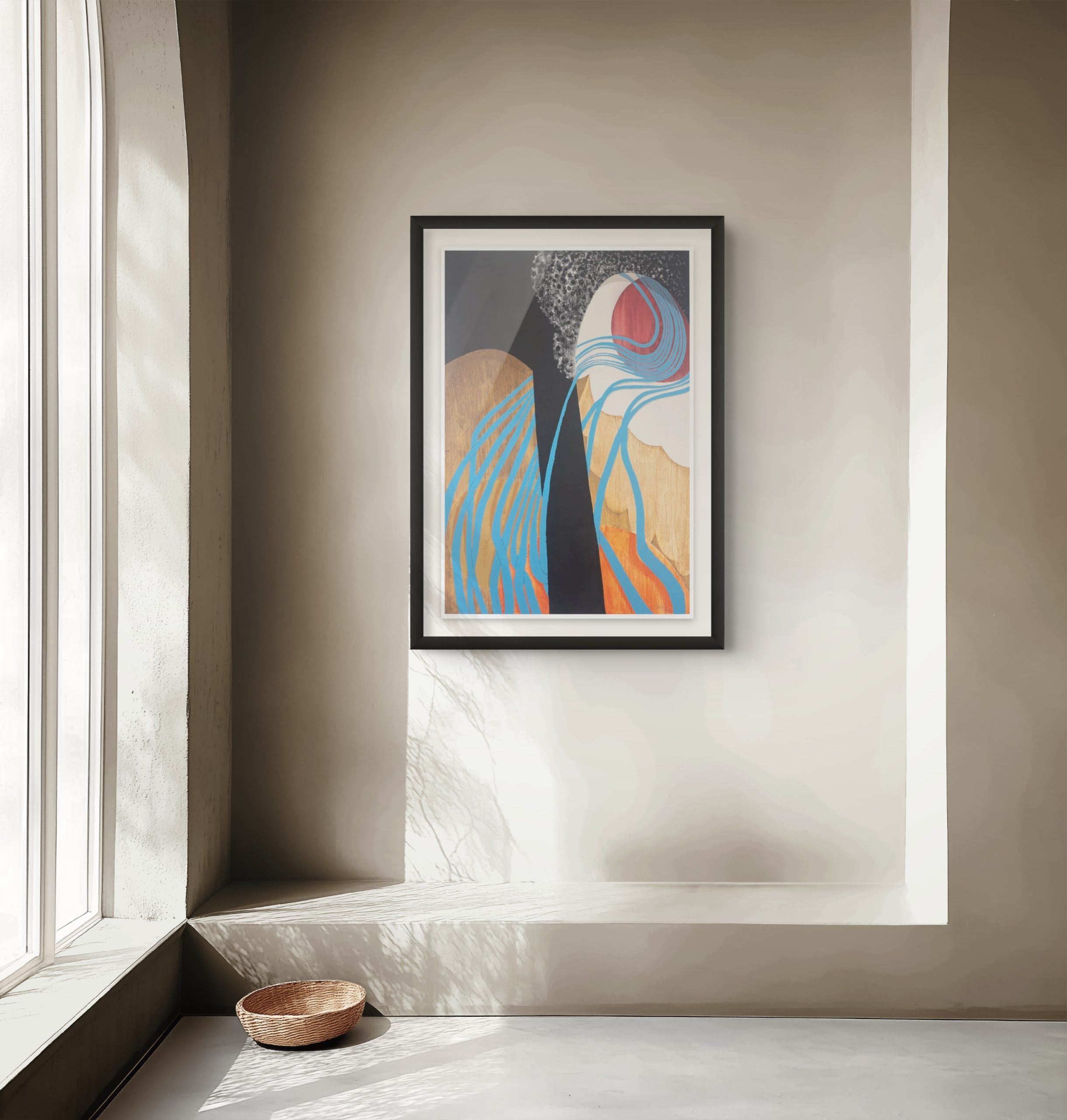
Interested in adding Mommy Long Legs to your collection? Click here to learn more about Carrie Moyer.